
‘Widespread’ Corby river and soil pollution presence could ‘pose a risk to human health’ says new study
A new report from environmental charity Earthwatch Europe, produced in partnership with the Corby community, has identified the presence of metals at levels that could pose a risk to the environment and human health.
Prompted by the ‘Toxic Town’ court case, the study involved 30 trained citizen scientists testing 52 freshwater sites and 28 soil samples from across Corby in July 2026.
Samples were analysed for 33 elements, including 29 metals and metalloids, using laboratory analysis by Artemis Analytical.
The project was initiated in August 2025 when Corby community leaders approached Earthwatch to investigate long-standing concerns over residual contamination from the former British Steel works.
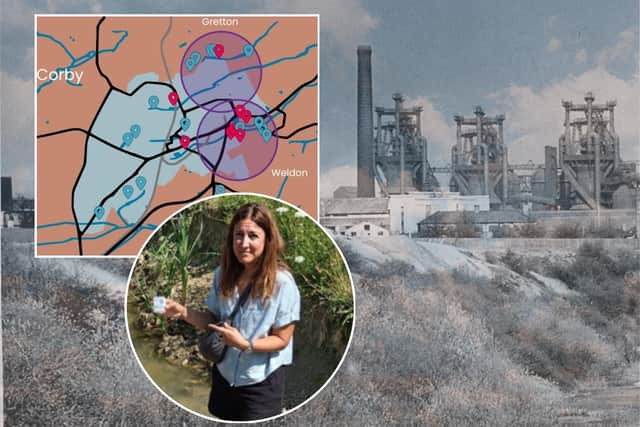

Dr Sasha Woods, an independent scientific advisor for Earthwatch Europe, said: “The findings indicate that some metals are present in freshwater at levels that could pose a risk to aquatic life, and in soil at levels that could impact human health, particularly in areas close to known historic waste sites.
“This study complements what we already know about metals pollution in Corby and highlights where further investigation and remedial action may be needed.
“We’re very grateful to the community in Corby for their support in producing this report and we’re proud to be able to support important citizen-science projects like this.”
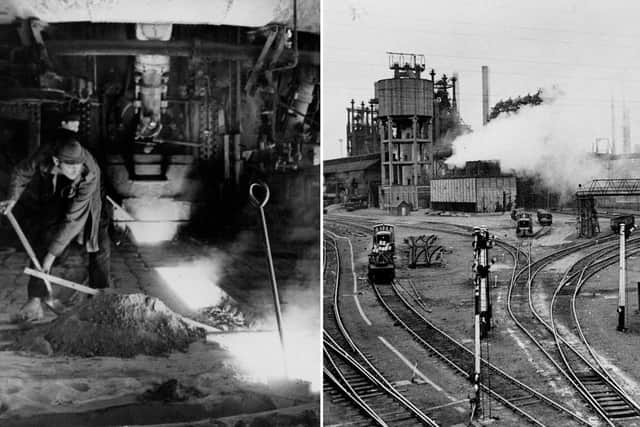
The concerns date back to the site’s decommissioning and a landmark 2009 court case, which found that airborne industrial contaminants – including cadmium, chromium and nickel – had caused local birth defects during the decommissioning process.
Contaminated waste from the decommissioned steelworks site was moved by lorry to Deene Quarry, a former landfill site on the outskirts of Corby, and was buried there.
During the height of the steelworks’ production, toxic industrial sludges, slag and contaminated waste from the furnaces was dumped in heaps in the Longhills area – close to Weldon.
There are 37 former landfill sites, covering roughly one mile sq (2.35km sq) in total, recorded in the Corby area in the Environment Agency’s Historic Landfill record. Pre-1974 sites are incompletely recorded.
The results showed elevated concentrations in waterbodies located near two general areas – Deene Quarry and a slag heap in Weldon.
In this most recent study, Earthwatch and the community set out to address whether metals were more likely to have entered waterbodies through urban runoff or landfill leachate, and whether or not these metals are also present in Corby’s soils.
At every freshwater site across Corby, at least one metal or metalloid was present at concentrations which exceed their predicted no effect concentration (PNEC), the concentration below which no adverse ecological effects are expected.
Nickel was detected in 28 freshwater samples at concentrations higher than its PNEC, and cadmium was detected at elevated concentrations in six freshwater samples.
These results – determined during the driest summer on record – are comparable to that of winter sampling, indicating a relatively constant source of pollution; likely groundwater and landfill leachate rather than urban runoff.
In soil samples, cadmium was detected at concentrations higher than its Soil Guideline Value (SGV) in two sites, and arsenic at six sites – meaning that long-term exposure could pose risk to human health.
Elevated concentrations of cadmium and nickel in freshwater, and cadmium and arsenic in soil, were largely confined to Deene Quarry and a former slag heap in Weldon.
Lee Barron, MP for Corby and East Northamptonshire, said: “Once again our community have stepped up to take part in this mammoth exercise. My thanks go to Earthwatch, and the scientists who have helped to make this possible and the citizen scientists who volunteered their time.
“I understand the concerns of residents, and believe this report is an important step in their campaign. This report contains scientific data which gives decision makers an invaluable insight into what work needs to be done.
“Local authorities have a duty to inspect and identify sites where contamination is causing unacceptable risks and North Northamptonshire Council should immediately publish a plan to make these sites safe.”
Artemis Analytical supported Earthwatch Europe and the Corby community by providing trace elemental analysis of their water and soil samples.
The Environment Agency has ‘enhanced’ its monitoring programme across Corby’s Gretton Brook and Willow Brook rivers. Their sampling covers a range of water quality indicators and potential pollutants.
Their monitoring to date ‘does not indicate any significant impact on the freshwater environment’.
An Environment Agency spokesperson said: “We welcome the work of citizen science volunteers in Corby, and the commitment residents are showing to protecting their local environment.
“We are reviewing the latest Earthwatch report alongside our own evidence. Our monitoring to date does not indicate widespread or significant harm to the freshwater environment across the Corby area.
“We will continue to assess the evidence and take any further action needed.”
A spokesperson for North Northamptonshire Council, said: “North Northamptonshire Council takes environmental concerns extremely seriously and is aware of the findings published by Earthwatch.
“We welcome the work undertaken and will now review the report in detail, alongside other relevant partners where appropriate.
“It is important that we fully assess the data and supporting information with a detailed technical review to determine whether any further investigation is required.
“Residents can be assured that any credible evidence of a risk to human health or the environment will be thoroughly considered and investigated through the appropriate regulatory processes.”