
Wrong car parts delivered? Here's how drivers in the UK can get their money back quickly

You’ve been waiting days for your car parts. They finally arrive, you tear open the box, and... they’re the wrong ones. The brake pads don’t match, the filter’s the wrong size and the headlight won’t even come close to fitting. Here’s what you do.
If this has happened to you in Kettering, Corby or Wellingborough, you’re not alone. For motorists across Northamptonshire, where local parts suppliers can be limited, online ordering has become essential.
According to Statista, the UK online auto parts market includes major retailers like Eurocarparts (£137 million in 2024 sales) and AUTODOC (£51 million). Millions of orders go out every year and yes, sometimes things go wrong.
But here’s the good news: Incorrect orders are fixable. In fact, most cases are sorted within a week if you follow the right steps. Let’s take a look at the process.
Why parts don’t fit (and why it's not always someone’s fault)
Getting the wrong parts happens for surprisingly simple reasons. The biggest culprit? Entering incorrect vehicle details when ordering. Your VIN number, the exact year, even which engine variant you have – get any of these wrong and you’re ordering the wrong part without realising it.
Local mechanics across Northamptonshire regularly see customers who’ve ordered parts online that don’t fit. The most common issue? Customers select “Ford Focus 2019” without checking whether they've got the 1.6 or 2.0 engine, or the standard versus ST-Line spec. Many vehicles have multiple versions within the same model year, and a part for a 2.0-litre Focus won't fit a 1.6-litre Focus, even if they look identical from the outside.
Then there’s the UK vs European spec issue: Your "standard" UK-market car might have a different emissions kit or electrical system compared to the continental version. Online catalogues do their best, but they’re not infallible.
According to AUTODOC, one of Europe's largest online parts retailers (and the second-biggest in the UK by revenue at £51 million in 2024), a significant chunk of returns come down to either catalogue errors or customers entering the wrong vehicle details. It happens to everyone.
There’s also the OEM versus aftermarket question. Original parts are made to exact factory specs. Aftermarket parts, even good quality ones, might have tiny dimensional differences that mean they won’t quite fit.
The point is: If you’ve ordered the wrong part, you’re not alone, and you’re not stupid. The system’s complicated.
What to do right now
Right, the part doesn’t fit. First rule: Don’t try to make it fit. Don’t force it, don’t trim it, don’t start installing it "to see if it works." Just stop.
Second rule: Don’t rip off all the packaging in frustration. I know you want to, but damaged packaging makes returns harder. If you need to check the part number, open it carefully.
Now grab your phone. Take photos of everything: the part, the packaging, the labels with part numbers. Compare what’s printed on the part with what’s on your order confirmation. Sometimes you'll spot the problem immediately: Wrong year, wrong model, wrong engine code.
Then contact the seller. Don’t put it off until tomorrow. Most reputable online retailers have customer service teams available via email, live chat, or phone. Quick communication shows you’re acting in good faith. Keep all correspondence as evidence of your attempts to resolve the issue.
Customer reviews consistently show that those who contact retailers within 24 hours of discovering an issue get significantly faster resolutions, often within 3 to 5 days, compared to those who wait a week or more. The sooner you act, the smoother the process.
The returns process (less painful than you think)
This is where people get anxious. How long will it take? Will I have to pay? What if they say no?
No need to panic. Under UK consumer law, you’re actually quite well protected. The Consumer Rights Act 2015 and the Consumer Contracts Regulations are on your side. For online purchases, you've got a 14-day cooling-off period from when you receive the item during which you can return it for pretty much any reason and get your money back.
Here’s how it works in practice: You send the part back. The retailer receives it and checks it's not been installed or damaged. They process the return in their system. They tell their payment processor to refund you. The money appears in your bank account. Each step takes time, which is why the whole process can take up to 14 days. Not ideal, but at least you know why.
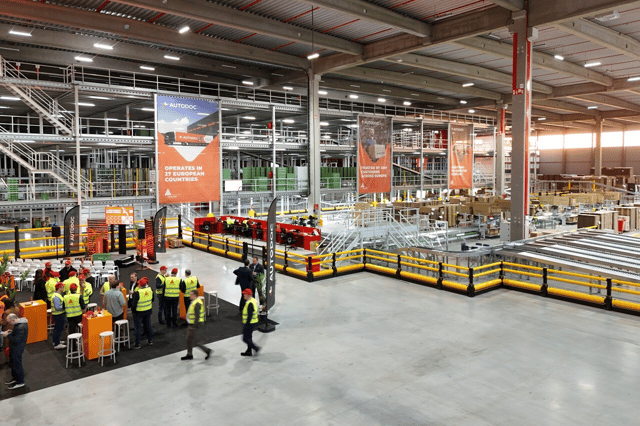
Some retailers have made this easier. AUTODOC, for example, operates four large warehouses across Europe in Berlin, Szczecin, Cheb, and a new one in Ghent, Belgium (opened in 2025). Returns go to whichever warehouse is closest, which speeds things up compared to companies that ship everything back to one central depot. They also provide tracking through your account so you can see what’s happening at each stage.
Who pays for return postage? It depends on who made the mistake. If the retailer sent you the wrong part or their website had duff information, they should cover the cost. If you ordered the wrong thing because you put in the wrong registration number, you’ll probably pay the return postage. Either way, check their returns policy before buying. It should be clear.
To speed things up: Use the original packaging if you’ve still got it, include all paperwork that came with the order, and send it tracked so you've got proof. Keep the tracking number somewhere safe.
Your consumer rights under UK law
The Consumer Rights Act 2015 provides strong protections for online purchases. When you buy something online, by phone, or by mail you get a 14-day cooling-off period starting from when it arrives. During that time, you can change your mind for any reason, whether you don’t like it, don’t need it, or it doesn’t fit, and receive a full refund including delivery costs.
If the part doesn’t match its description or isn’t fit for purpose (such as a part that’s supposed to fit your car but doesn’t), the retailer has to sort it out. They must refund you, including reasonable return costs. That's the law, not a favour.
If you need guidance on your consumer rights, Citizens Advice offers free, expert advice. You can reach them on their national helpline at 0808 223 1133, or find your local Citizens Advice office for Northamptonshire. Trading Standards also investigates businesses that don’t follow consumer law. For disputes under £10,000, you can access the small claims court without needing a solicitor. While most cases don’t reach that stage, it's good to know that this option exists.
How to avoid compatibility issues before you order
Prevention is better than cure. Before ordering, find your VIN, your Vehicle Identification Number, a 17-character code that precisely identifies your car. It’s in your V5C logbook, on a plate inside the driver’s door, or visible through the windscreen.
These days, most decent online parts retailers let you search by VIN. AUTODOC’s system, for instance, takes your VIN and shows you only parts that definitely fit your specific car, not just any 2019 Focus, but your 2019 Focus with your engine and your spec. It’s not perfect (nothing is), but it’s miles better than guessing.
When in doubt, contact customer support before ordering. A quick message via live chat or email can confirm whether a part will fit far easier than dealing with a return. Ask specific questions: Is this OEM or aftermarket? Does it need any modifications? Will it fit the UK version of my car?
If you’re uncertain about compatibility, consider bringing your old part to a local garage in Northamptonshire for verification. Many mechanics can quickly confirm the part number and specification, which takes only a few minutes and can save the hassle of ordering the wrong part and dealing with returns.
Keep everything. Order confirmations, emails, screenshots of the product page – all of it. If there’s ever a dispute about what was promised versus what arrived, you'll want that evidence.
Buy from established retailers with clear returns policies. Yes, price matters and we're all watching our pennies. But a slightly more expensive part from a company with solid customer service often works out cheaper than a bargain part that turns into a nightmare return.
You’ll be fine
Getting the wrong part is annoying. You’ve wasted time, maybe a bit of money, and you’re still without the part you actually need.
But it’s a fixable issue. Act quickly, photograph everything, know your rights, keep your correspondence polite but firm, and most retailers will sort it out without fuss. The vast majority of returns are resolved within 7 to 10 days.
The UK online parts market works pretty well most of the time. Companies are investing in better VIN-matching systems, faster delivery, and clearer returns processes. Yes, things occasionally go wrong, but when they do, there’s a system to fix it.
So take a breath, follow the steps above, and you’ll be back on the road soon enough. And next time? Check that VIN twice before clicking ‘buy’.
Check out AUTODOC for yourself.