
This may be the reason why Corby smells of fish and tankers are sucking up contaminated water
Why does Corby smell of rotten fish? That’s the question posed by residents over the past few days.
As the county bakes in the heatwave, people from across the town have been reluctant to open their windows due to the stink described by some as ‘urine’, ‘dirty nappy’ and a ‘weird’ ‘foul’ ‘rotten fishy’ odour.
One resident said they had been washing down their home in an attempt to get rid of the whiff, while another thought it was coming from their light fittings.
Although some odour issues do originate from industrial sites – including landfill – and landspreading of manure muck on agricultural land can also cause smells, this smell is distinctly ‘fishy’.
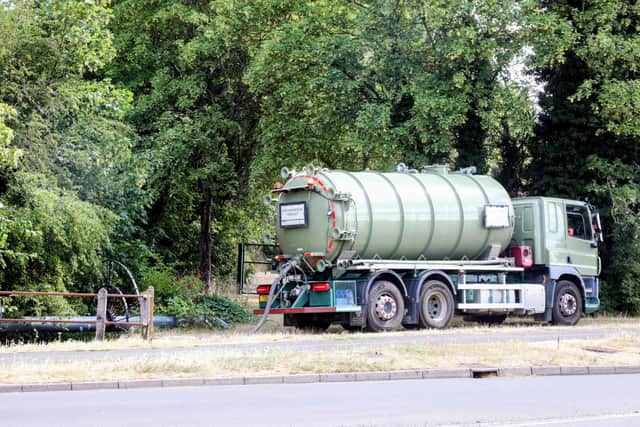

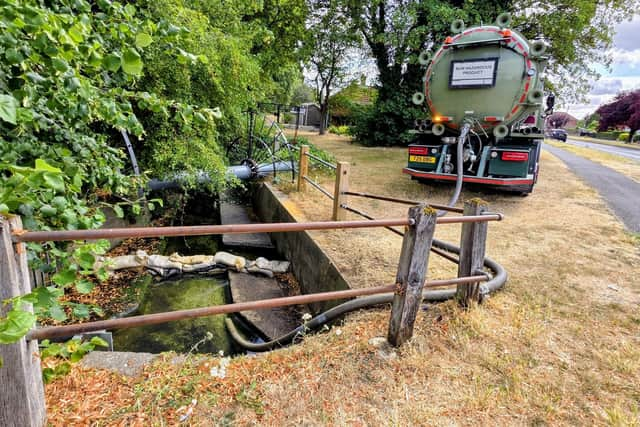
This year’s drought has meant rainwater from roads into surface drains has reduced the amount to almost nothing, but something has been leaking in Corby’s Willow Brook, with a waste water tanker stationed in Rockingham Road since Saturday (July 25) to suck away contaminated water.
A spokesman for Anglian Water said: “Third parties are incorrectly putting wastewater into the surface water system and we are supporting with tankers to protect the environment and community.”
It is understood food waste, including fish remains, is being dumped into the rainwater surface drain by a takeaway restaurant, rather than being disposed of in bins.
The contaminated water is then passing through pipes and emerging into the brook in Rockingham Road.
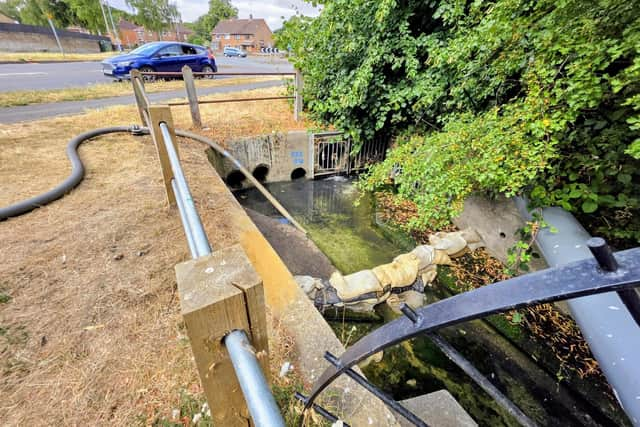
Efforts to prevent the waste being washed further downstream include dams along the Willow Brook – the stream feeds into the balancing lakes near Stephenson Way – flowing from Corby to the River Nene near Elton.
Tankers have been at the site for six days, 24 hours a day – but the clear up doesn’t come cheap and is estimated to have already cost tens of thousands of pounds.
Foul water drains carry contaminated wastewater from toilets, bathrooms and kitchens to treatment plants, while rainwater (surface water) drains transport clean runoff from roofs and driveways directly into local rivers or soakaways.
Local resident Kevin Watt noticed the pong coming from the the brook and is concerned about the impact on wildlife.
He said: “It does smell. It’s right next to homes. This stuff shouldn’t be going down the rainwater drain, it will impact the wildlife in the river and go downstream.
"I don’t think people know the water from the drains ends up in the rivers.”
It is understood the contaminated drain will have to be fully cleaned.
Now the water is in the brook, the Environment Agency has become involved.
It is understood the source of the contamination has been located.
The Environment Agency (EA) has enforcement powers with sanctions for pollutors including an unlimited fine, up to five years’ imprisonment or both.
Advice from the EA states: “Surface water drains discharge directly to the environment. You must make sure contaminated water from your premises and business activities goes into the foul drain or is recycled or removed by a registered waste carrier.
"You must not let your business or organisation cause or allow pollution. Pollution is when any substance that harms or could harm people or the environment gets into the air, water or ground.
“If you pollute, you could get an unlimited fine, go to prison for up to five years or both. You may also have to pay for the whole cost of the clean-up. There could be further costs such as paying compensation to third parties, higher insurance premiums or loss of contracts.”
According to the UN, higher temperatures during drought reduce dissolved oxygen, harming aquatic life and making water taste and smell unpleasant. With rivers and lakes flowing more slowly or even stagnating, harmful algal blooms and bacterial growth can flourish.
Anyone concerned about odours can report them to North Northants Council.
Their advice states: “We receive complaints about a variety of odours which can be worse during humid conditions. An odour must be a regular occurrence, last for some time, and be severely affecting you in your property in order for us to investigate.
“You may be asked to keep a record, over a period of days or weeks, of what you can smell, for how long and at what time of day. We will then use this information to determine if there is any pattern to the problem and then seek to find the cause and resolve the issue.”
The Environment Agency has been contacted for comment.