
Milestone for Rushden bank as it marks 125 years on town's High Street
A town centre bank has reached a major milestone as it marks 125 years on Rushden High Street.
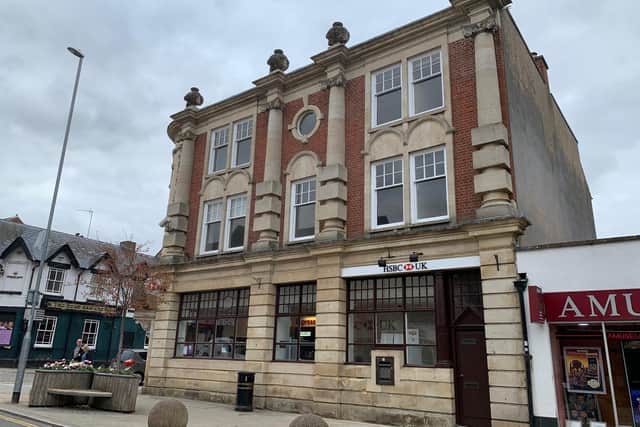
HSBC UK proudly stands on the corner of Rushden High Street and College Street, right at the heart of the town.
And while the High Street has seen many comings and goings over the years, this bank has been a constant for people popping into town – albeit for a four-month closure earlier this year to deal with a serious structural issue.
Thankfully this has now been sorted and the bank re-opened to customers last month, with the area manager saying the work was ‘non-negotiable’ to protect the building for the ‘long-haul.’
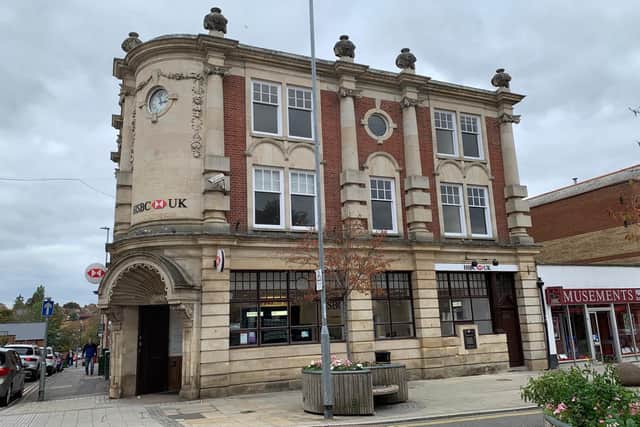

And such a prominent building in the town centre certainly has a lot of history too, from its opening in 1900 to the impact of the wartime years and the changing face of banking in recent times.
The branch has shared some of its history with the Northants Telegraph in honour of its 125 years in the town centre.
The history of HSBC UK in Rushden
The Rushden branch opened as part of the Midland Bank (now HSBC UK) network in November 1900 under the management of Reginald Smith, formerly of the bank’s Wellington branch.
He was joined late that month by William Merry, who had been working at the Market Street branch in Grantham.
When war broke out in 1914, Reginald Smith was still the manager and led a small team of four employees through this difficult period.
At least three men from this branch joined the armed forces and at least two female members of staff were recruited to the branch during the First World War to help ensure usual banking services could continue.
In October 1916, Reginald Smith wrote to the Superintendent of Ladies’ staff at the bank’s head office, requesting a pay rise for one Miss V Jellis, who he reported had been doing all of the counter work as an acting cashier of the branch, usually a role undertaken exclusively by men, and who even in 1919, after the end of the war, he wished to keep in position due to her good work.
The Second World War halted the bank’s growth and brought widespread destruction to the branch network, with more than 1,350 reports of damage following aerial bombardment of major towns and cities.
Oscar Archibald Muxlow was the branch manager at this time, managing a team of eight employees.
By the end of the conflict in 1945, this would have reduced to just three people, including two temporary employees, as men left their branches to enlist with the armed forces.
At least seven men from the branch left to enlist, most returning but sadly losing their colleague, Douglas Pollard, who had served as a flight lieutenant with the Royal Air Force Volunteer Reserve and who lost his life on January 1, 1945, aged just 23-years-old.
With so many men leaving their branches to join the war effort, countless female members of staff were employed across the bank.
Over the course of the war, one part-time and two full-time members of female support staff were employed to help ensure customers could still access banking services.
Training centres were created across the country to provide new staff with crash courses in the skills they would need to become cashiers, securities clerks and accountants.
By the end of the war, women were almost exclusively manning the cashier’s desks and were undertaking work normally assigned to male members of staff, such as securities, foreign work and overseeing the safes and strongrooms.
Banking was still heavily focused inside the branch in the 1950s, with the vast majority of transactions conducted onsite and with staff relying on manual typewriters, ledger-posting machines and hand-written reference cards.
Transformation of banking
As the twentieth century progressed, life at the Rushden branch gradually began to transform, especially as new technologies were introduced during the 1960s and the branch accounts were computerised on October 12, 1971.
The bank’s post-war history is dominated by innovation in the range of banking services it provided.
Gift cheques, introduced in 1955, were the first of their kind in the UK.
Midland also became the first British bank to advertise on television in 1956.
Soon afterwards, in 1958, it became the first bank to offer non-secured personal loans which added to the bank’s reputation as an innovator.
This innovation was to continue for the rest of the century, another example coming in 1989 when the bank launched First Direct, the first telephone bank in the UK.
Do you have any pictures or memories of HSBC UK in Rushden High Street?
If so, share them with us by emailing [email protected]