
Lottery grant delight for Finedon church
St Mary the Virgin Church, Finedon, has been awarded a grant by The National Lottery Heritage Fund to create an inclusive and accessible space for community events.
The £97,992 grant will support an ambitious renewal project designed to improve accessibility, the church says, and open up more of the historic building for wider community use and ensure this much- loved place of worship continues to thrive for generations to come.
Together with contributions from the church’s own funds, parish and community fundraising and generous support from The Congregational and General Trust, The John Warren Foundation, The Benham Charitable Settlement, The Beatrice Lang Trust and the George Family Foundation, The National Lottery Heritage Fund grant brings the total project budget to just over £145,000.
The Rev Morna Simpson, vicar of St Mary’s, said: “In obtaining this grant from the Heritage Fund, we will be able to increase opportunities to serve the wider community.”
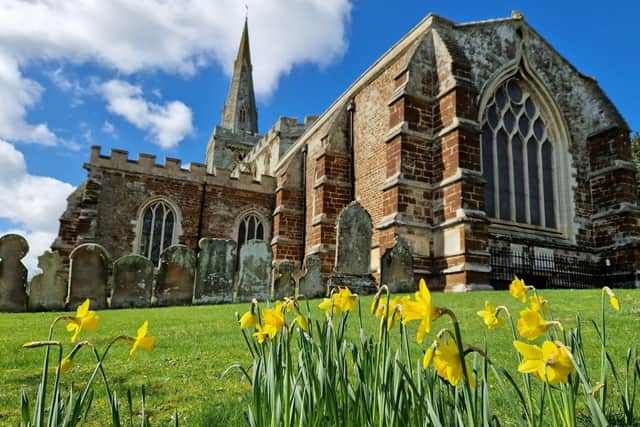

Churchwardens Colin Needle and Julie Kightley added: “Thanks to National Lottery players, this renewal project will reflect St Mary’s long-standing commitment to being a welcoming, inclusive and outward-looking church”.
There is some rare and beautiful heritage in this church: a nationally significant pipe organ installed in 1717 and believed to have been originally built for St George’s Chapel, Windsor; a monk’s cell housing a library founded in 1788 comprising a collection of about 900 books dating from the 15th century to the 19th century; and some particularly fine stained glass windows.
This project, made possible by the Heritage Fund, is essential to ensure that St Mary’s Church remains viable, inclusive and actively used in the 21st century and beyond, thereby preserving its wonderful heritage.
The renewal will transform the west end of the church into a flexible, accessible, multi-use community space incorporating a kitchen and servery, modern toilet facilities including a fully accessible toilet, baby changing facilities and improved wheelchair access.
By future-proofing the building and making it into a true community resource, this will ensure that the entire site, along with valuable artefacts, will be preserved, remain viable and be available for years to come.