
'High demand' for Kettering hospital and ambulance services as people told stay away unless 'real' emergency
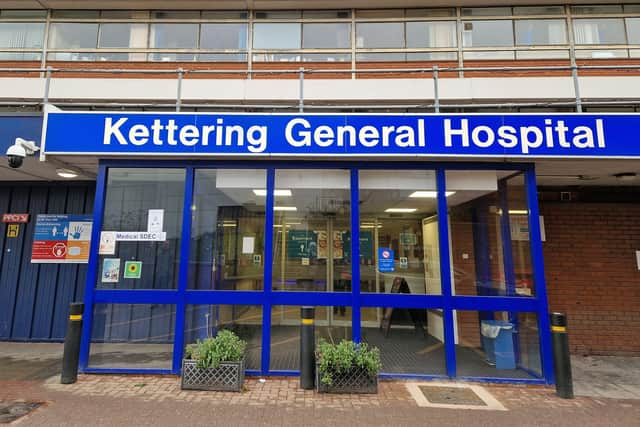
Current in-patients at Kettering General Hospital and those hoping to be treated have been kept waiting for hours as the high demand for beds and ambulances continues, figures have revealed.
Today East Midlands Ambulance Service (EMAS) bosses declared the first critical incident for the service, which covers Northamptonshire, amid growing pressure on hospitals as flu and norovirus illnesses spread.
As the Northamptonshire Integrated Care Board members met on December 19, to hear how emergency care and ambulance services were struggling, the average time ambulances waited to hand over patients was more than one and a half hours (1hr 34mins), with 46 per cent of handovers taking more than the 60 minute mark.



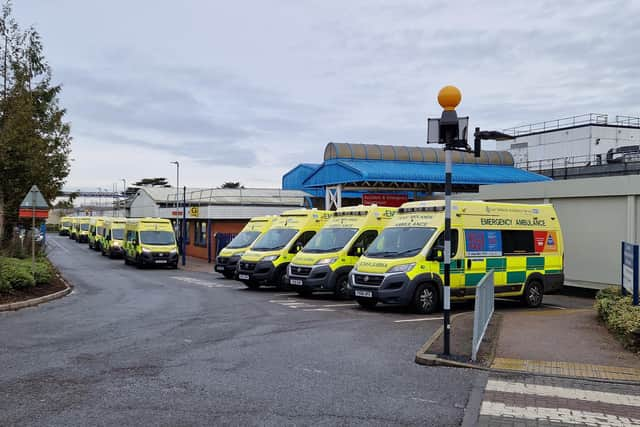
On Saturday at least 10 ambulances were seen at about 1pm waiting outside Kettering General’s A&E department.
From December 1 to 29, 2024, the average handover time for a patient at KGH from EMAS was one hour eight minutes, according to the NHS England daily ambulance collection figures.
The University Hospitals of Northamptonshire’s chief operating officer, which manages KGH, Sarah Noonan, said: “We are currently experiencing high demand for our services which impacts on waits in our emergency department, for ambulance handovers, admissions to hospital and discharge from hospital.
“We have well established escalation procedures and our teams are working hard to deliver appropriate care in all areas.”
She urged people with flu like or diarrhoea and vomiting symptoms to stay away from the hospital unless in a ‘real’ emergency.
Ms Noonan said: “Local people can support us by only going to our emergency departments if it is a real emergency and accessing other NHS services such as pharmacies, NHS 111 and GPs and Corby Urgent Care centre instead.
“In addition self-care at home is very important and people with flu like or diarrhoea and vomiting symptoms (norovirus) should look to treat themselves at home in the first instance. These illnesses are common in winter and very infectious. You should not attend emergency departments, or visit friends or relatives in hospital, if you have these symptoms.”
EMAS has been using its highest ever number of ambulance ‘resources’. The service has said patient handover delays are not an ambulance and hospital-only issue but a ‘symptom of wider pressures across the NHS and social care systems’.
Michael Jones, divisional director for Northamptonshire at EMAS, said: “Together with partners across the urgent and emergency health sector we are responding to significant demand and pressures. Currently at EMAS every day we are deploying our highest number of ambulance resources than we ever have before.
“We are working with our partners to ensure patients on ambulances are taken into the care of hospitals as soon as possible, so we can respond to patients waiting for our help in the community. Where possible, we’re making use of alternative healthcare services for patients’ needs rather than taking them to a busy A&E.
“999 is for life-threatening emergencies, if it’s safe for you to do so, please access help via an alternative service. For example, a local pharmacy, your nearest urgent treatment centre, or if you do need hospital treatment, consider if you can safely make your own way to A&E.
“We continue to work with our partners and escalate information about the challenges we face.”
Almost every general and acute bed at Kettering General Hospital was occupied in the last week of December, according to latest figures. The most recent NHS situation report for this winter shows Kettering General Hospital had an average of 562 out of 584 beds occupied (96 per cent) in the week to December 29, 2024. Across England, 89 per cent of available beds were occupied in the most recent week. But, no beds at KGH were patients with flu last week or the week before – over the same period seven patients tested positive for Covid-19.
To help patients with less acute care needs, Spinneyfields Specialist Care Centre in Rushden has been opened providing 65 ‘step-down’ bed spaces in the community.
People have been asked to treat their own flu and norovirus at home by resting, drinking lots of fluids and taking paracetamol.
Flu symptoms come on very quickly and can include a sudden high temperature, an aching body, feeling tired or exhausted, a dry cough, a sore throat, a headache, difficulty sleeping, loss of appetite, diarrhoea or tummy pain, feeling sick and being sick.
Norovirus symptoms are suddenly feeling sick, projectile vomiting, watery diarrhoea, and some people also have a slight fever, headaches, painful stomach cramps and aching limbs. The symptoms appear one to two days after you become infected and typically last for up to 2 or 3 days.
People should manage at home by drinking lots of fluids, taking paracetamol, resting, and not going to work or socialising until 48 hours after symptoms have stopped.