
Campaigning Spice Girl joins calls for meeting with Prime Minister following IOPC report into Corby murder victim's case
Campaigners and family members of women killed by men are demanding a meeting with the Prime Minister and clear action to address what they say are ‘systemic failings’.
Yesterday, the Independent Office for Police Conduct (IOPC) concluded four Northamptonshire Police officers should face misconduct proceedings over their handling of domestic abuse allegations reported by an Indian woman living in Corby who was later found dead in a car boot.
Corby resident Harshita Brella reported to Northamptonshire Police on August 29 last year that she had suffered domestic abuse by her husband Pankaj Lamba. He was arrested on September 3 and released on police bail, with conditions not to contact his wife, and issued with a Domestic Violence Protection Order.
But Ms Brella’s body was found in the boot of a Vauxhall Corsa in Ilford, Essex, on November 14. It is suspected she was strangled in Corby on the evening of November 10 by Mr Lamba.
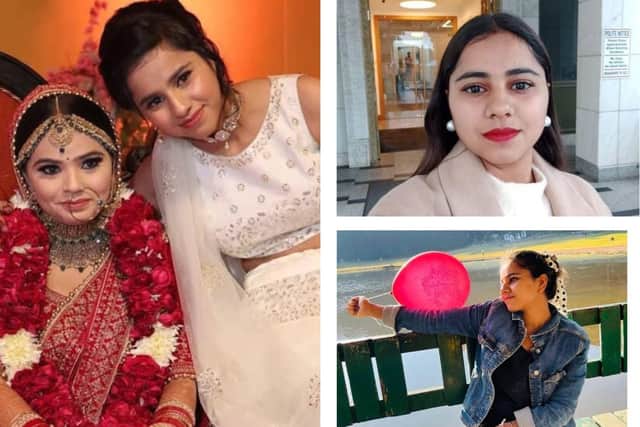

Following the IOPC statement, campaigners have demanded a meeting with the Prime Minister and clear action to address the systemic failings that see black, minoritised and migrant (BMM) women repeatedly failed by the justice system in cases of domestic abuse – that have ultimately led to murder.
Ms Brella’s sister Sonia Dabas, speaking to the Northants Telegraph from her Delhi home, said: “I have been saying from the beginning of this case that the police have shown a very negligible agency. A lot of negligence has been shown in this case.
“I just want to say that a lesson should be taken from this and justice should be given to Harshita as soon as possible by giving priority to this case.
“This should not happen again in the future. Killers like Pankaj Lamba should be sent behind bars.”
Research from the Invisible Women campaign – including Melanie Brown aka Mel ‘Scary Spice’ B – has been sent in a letter to Sir Keir Starmer.
It shows of the 369 female domestic homicide victims recorded by the UK Government between 2020 and 2024, 88 (one in four) were from BMM backgrounds - almost 50 per cent higher than within the general population.
Melanie Brown – Mel B from the Spice Girls – who has joined the campaign said: “This important campaign challenges racism and discrimination in policing and policy. We know it happens and it is up to us all to take action and call for much-needed changes….. I met some of the families who have lost their loved ones.
“Their stories devastated me but their courage to fight in the face of their grief just blew me away. It is so important that everybody joins us in this campaign and does everything they can to support them.”
A spokesman for the Invisible Women campaign said: “In the light of the IOPC findings, and its own research, the Invisible Women campaign is calling for significant change, including independent oversight and clear standards for death and serious-harm police investigations involving BMM women.”
They have also called for
· Mandatory cultural competence training and accountability across the justice system – including policing and courts;
· Guaranteed access to specialist ‘by and for’ services and safe accommodation regardless of immigration status;
· An end to No Recourse to Public Funds and removal of immigration-related barriers to safety;
· Disaggregated data based on ethnicity and public reporting of obligations by agencies such as the police.
The letter to the Prime Minister, signed by Killed Women, Southall Black Sisters and seven bereaved families, said: “Following the Independent Office for Police Conduct (IOPC) damning statement into police failings surrounding the death of Harshita Brella, we are writing to you on behalf of the Invisible Women campaign, the Killed Women network, Southall Black Sisters (SBS) and the seven bereaved families whose lived experience and expertise underpin a new report (Invisible Women MADE Visible: Learning from the Femicides of Black, Minoritised and Migrant Women).
“Nationally, a woman is killed roughly every three days; about one in five homicides are domestic. Migrant women with no recourse to public funds are three times more likely to face violence against women and girls, with immigration status routinely weaponised against them by perpetrators.
“Action is urgently required.”