
'Wine, winter and the art of celebration'
Olivier Charlette is the founder of 51Wines at Nene Court, Wellingborough – a place devoted to French wines, craftsmanship and the quiet joy of taking time to share a story over a glass.
There’s a quiet truth hidden in the way we gather in winter.
The air cools, the days shorten and life itself seems to ask us to slow down.
In that stillness, we turn to warmth, not just from fire or food, but from one another. And somewhere in that ritual, there’s often a bottle of wine on the table.
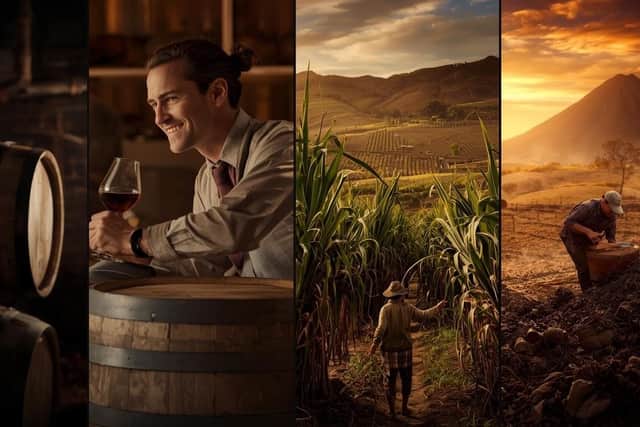

Wine, you see, is not just a drink. It’s a symbol of order within chaos, of transformation through time.
It begins as fruit, fragile, temporary, perishable. Through patience and craft, it becomes something lasting, something with depth. In that way, it mirrors us.
We’re all trying to make sense of time.
We live through seasons of abundance and scarcity, of joy and fatigue.
The vineyard knows that rhythm intimately. The vines must be pruned to flourish. Too much growth, and they weaken; too little, and they wither.
It’s an eternal balance, the same balance we seek in our own lives, between indulgence and discipline, freedom and responsibility.
When you open a bottle of wine, you’re not just tasting fermented grapes; you’re tasting the memory of a season, the discipline of a craftsman, the resilience of nature itself.
It’s a reminder that good things require care, and that not everything meaningful can be rushed.
In our age of immediacy, of next-day deliveries and digital gratification, wine insists on patience.
It doesn’t care for speed. It doesn’t reveal itself all at once. The first sip is often a question, not an answer. It takes time, warmth, and attention before it shows you, its heart.
How many things in our lives work that way now?
To share a bottle of wine is to make space for presence.
You can’t truly rush through a glass. You can drink fast, yes, but you can’t experience fast. Wine demands awareness, of who you’re with, of what you’re feeling, of how the world around you tastes and smells and sounds.
In that sense, it’s a small act of rebellion against distraction.
There’s also something humbling in it. The vineyard teaches humility.
Every vintage begins with uncertainty: too much rain, not enough sun, frost at the wrong moment, or a harvest that comes late. The grower can’t control everything, only what lies within reach. The rest belongs to nature, to chance, to faith.... Fate.
And yet, despite that uncertainty, they begin again each year. They prune, they tie, they wait, they hope.
There’s a profound wisdom in that, a recognition that effort and surrender coexist. That’s the same rhythm we live by, whether we notice it or not.
When you pour a glass and hold it to the light, you’re looking at something born from both intention and accident, order and risk.
There’s discipline in the structure of the vineyard rows, and chaos in the weather that shapes them. There’s human craft in the barrel and nature’s wildness in the grape. That duality is what gives wine its life, and it’s what gives our lives meaning too.
In winter, as we gather to eat, talk, and celebrate, that truth feels sharper.
We drink not to forget but to remember that we are part of something older and larger than ourselves.
The vineyard doesn’t hurry, and neither should we.
A good wine doesn’t shout for attention. It waits for you to listen. It unfolds in layers, fruit, spice, smoke, soil, like a conversation between the land and the maker. It teaches you to notice. To notice the subtleties, the textures, the things that don’t immediately announce themselves.
That’s what life asks of us too. To notice. To be still long enough to see meaning in the details.
When we rush through our days, we flatten experience into utility, What’s next, what’s faster, what’s easier. But when we take the time to engage with something fully, even something as simple as a glass of wine, we reconnect with depth. And depth, as every good vineyard knows, is what gives flavour to life.
Perhaps that’s why wine has been part of human celebration for thousands of years.
It reminds us that creation and time work together. That transformation, whether of fruit or of self, requires patience and vulnerability.
There’s a paradox in it: wine is fragile yet enduring, finite yet infinite in meaning. A bottle ends, but the experience remains.
That’s how memory works too. We can’t hold on to the moment, but we can let it shape us.
So, as the season turns and we raise our glasses, whether with family, friends, or quietly alone, perhaps it’s worth remembering that what we celebrate isn’t just the year gone by, but the act of living deliberately. Of pausing long enough to see that beauty exists even in imperfection.
The wine in your glass is not a product. It’s a process, a story of light, soil, care, and time. To taste it properly is to take part in that story, to say: I am here, in this moment, paying attention.
And maybe that’s the truest reason we celebrate.
Not to escape the world, but to acknowledge it, fully, consciously, gratefully.
So, pour slowly. Listen carefully.
And remember that “meaning, like a great wine, takes time to reveal itself”.