
Douglas Welch, 88, undergoes spinal procedure and regains his independence
Douglas’s advice to anyone, including those of advanced years, would be not to just accept what you are told first.
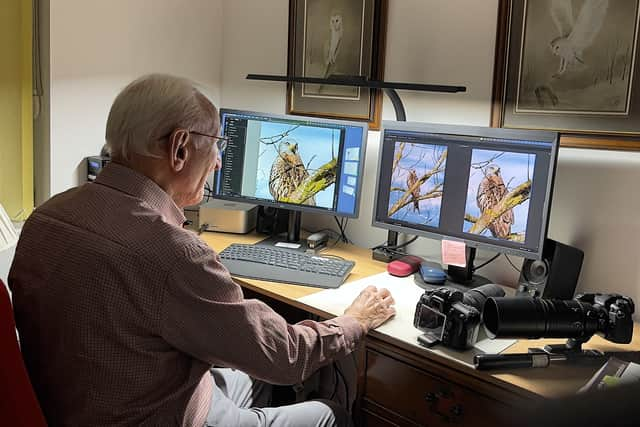
Douglas Welch is 88 and lives just outside Corby in Northamptonshire. He lives alone and is a keen golfer and nature photographer. He is physically fit and has maintained a steady weight for many years. In 2018, he had a lumbar decompression procedure. That was partially successful. Then, during the COVID-19 lockdown, he had an issue with his left hip, which led to a hip replacement in October 2020. Since then, he has had limitations with his mobility, but it wasn't too severe – he was still able to play golf and walk around okay until in 2022 his walking and recreational activities became increasingly difficult.

Between January 2022 and September 2024, he sought support through the NHS system to address severe pain in his left hip, thigh and knee. An MRI scan identified the return of lumbar compression. It was then that he discovered that a second operation through existing scar tissue does carry more risk, which can include injury to nerves, fluid leak of the spine and infection. This is not necessarily because it is something that the NHS doesn’t recommend, but instead the judgement of the surgeon based on clinical findings and scan review and if they believe the patient would be put at risk.
During this period of relative inactivity, together with the COVID-19 pandemic, he had noticeable muscle wastage in the left leg.
Then, in October 2024, he discovered that he could no longer raise his right arm above his head. By the time he saw a physiotherapist in February 2025, his fingers were numb and had little dexterity. The physiotherapist advised a second whole spine MRI, which showed that he had Myelopathy. Myelopathy describes the clinical signs and symptoms of spinal cord dysfunction (e.g. unsteady gait, weakness of arms and legs, numbness and clumsiness of hands and is often caused by either trauma or inflammation. In Douglas’ case, it was due to spinal cord compression in his cervical spine (neck) from wear and tear, causing narrowing of the spinal canal (Stenosis). He was unable to button up his shirt, use cutlery properly, or comb his hair with his right arm; he had to do almost everything with his left arm.
This now became more important to address than his ongoing lumbar issue. The second MRI revealed cervical stenosis, the cause of the Myelopathy, so now it was felt that an urgent procedure was needed to put that right.
Douglas decided to seek a second opinion regarding a possible lumber operation, so he researched the internet for neurosurgeons and spine surgeons. He found Will Harlow’s physiotherapy website. There, he found a reference to Mr Ghosh and got in touch with him for a second opinion. During an initial consultation, Mr Ghosh said he didn't regard the scar tissue as being any barrier to a second procedure. As a neurosurgeon, he utilises microscopic techniques and specialised tools designed for minimally invasive surgery.
Late February ’25, Douglas discussed with Mr Ghosh the latest MRI showing cervical stenosis, who explained its implications and recommended an urgent procedure involving decompression and stabilising two vertebrae with plates and screws. Mr Ghosh advised that this procedure was more urgent due to Douglas’ spinal cord being at risk, and he was losing neurological function (weakness in arms and legs). The lumbar pathology causing leg pain, whilst debilitating, was of lower urgency as this was not really causing any neurological function loss. This is because the spinal cord terminates at the upper segment of the lumbar spine, and below this are the bundles of spinal nerves, which generally tolerate a bit more compression than the spinal cord.
Douglas had a lot of confidence in him and his team, so he was happy to go ahead. Mr Ghosh carefully explained the procedure and risks in great detail, so Douglas knew precisely what was involved. But by this point, Douglas says he had virtually no quality of life, so he was ready to go ahead with the procedure.
On the 24th of March, he had the cervical spine procedure, and on the 15th of August, he had the lumbar spine operation. Following the lumber procedure, he experienced no discomfort or pain. He soon regained his balance, the use of his hands and arms, and could walk much better, but still required aid. He could use cutlery again, and his quality of life vastly improved.
He says the most challenging part of his recovery has been regaining his confidence in walking again. A few weeks ago, Mr Ghosh gave him clearance to start playing golf again. His motivation through all this is that he very much wants to retain his independence and mobility. He has always been a very active man and would really hate to have to sit around all day watching television. He lives on his own, so he needs to be mobile.
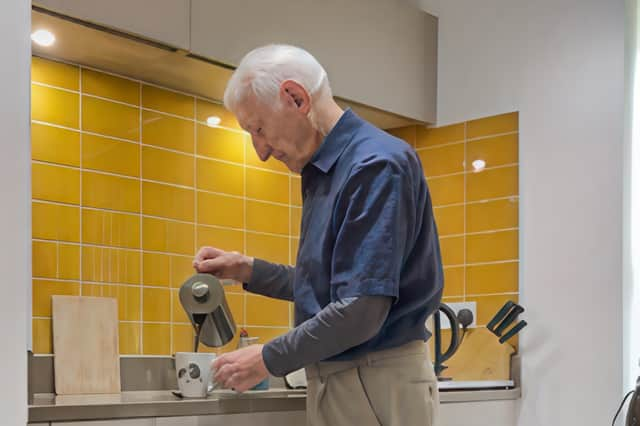
Douglas is now mobile around the house without any walking aids and only uses a stick when going outside for confidence. Douglas and Mr Ghosh have set a goal for him to be independent of this by the end of 2025 with the help of physio.
Douglas’s advice to anyone, including those of advanced years, would be not to just accept what you are told first. It's worth doing some reading and research on the subject and seeking a second opinion. It was this that led him to Mr Ghosh and his current recovery.
Anthony Ghosh MD FRCS - www.spinemdt.com