
Opinion: England’s late capitulation highlights ludicrous international rugby union ticket prices yet again
Fans who literally had a Golden Ticket for the Allianz Stadium will have come away feeling aggrieved after yet another near miss against a side they really should have beaten, especially in the context of the game with 18 minutes to go.
Now the RFU’s ticketing policy is rightly being questioned and a real-life comparison to Rugby League further emphasises this.
Gregory Richardson, Allianz Stadium
As Gallagher Premiership players such as George Furbank and Tommy Freeman aimed to impress Steve Borthwick in the opening block of the season, I became interested in researching what the RFU would be charging for England’s traditional November test matches. In the summer, for a 2 in 1 deal, the RFU charged £160 for two matches involving Wales, South Africa, Fiji and the Barbarians.
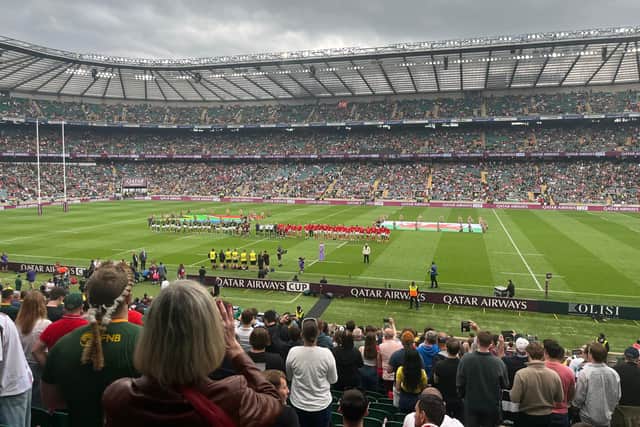

When you work out the cost per game is £80, I would be inclined to call that a bargain for modern-day international rugby union. However, £229 per ticket for England’s All Blacks and Springbok tests is just ludicrous. The fact that England threw away an eight-point lead and fell apart towards the end just heightens this debate, especially as England now must win all three of their remaining games to be able to label the campaign as successful.
On Saturday afternoon, two different codes of international rugby were being played simultaneously. As England and the All Blacks were kicking off their rugby union clash, England and Samoa were in full swing in the other code at Elland Road in Leeds. With a Golden match ticket costing just £40, the RFU are going to have their work cut out to keep their substantial fan base if the rival code is serving their fans an unbelievable bargain to watch England play international rugby league.
The Day Out costs broken down:
This November, the RFU are charging £230 for both the New Zealand and South Africa matches. The Australia price tag is £160 and the visit of Japan is another £100. This already seems rather expensive, however when you factor in travel costs and food for the day out and compare it with the costs England Rugby League (ERL) were charging for their two test series against Samoa, the cost of watching live international rugby union seems like daylight robbery.
I must point out that certain aspects of the mathematics and resultant comparisons will depend on people’s proximity to London, Wigan and Leeds respectively. However, if Saints fans wanted to watch two of their back three, Furbank and Freeman, in action against New Zealand, the prices will roughly have been the following for a day out at Twickenham on Saturday: £230 for the premium, golden match ticket; £40 for a return to Twickenham train station and a further £5.50 for a simple Tesco Express meal deal comprising of a sandwich, a packet of crisps and a drink of their choice included within the deal. The total cost, therefore, of the Twickenham experience for the weekend just gone would have been £275.50 per adult.
The comparison to a day out at the Rugby League internationals, both in Wigan on 26th October and in Leeds on 2nd November will raise many eye-brows. For a Northampton Saints rugby union supporter, the trip up to Wigan at the end of October would have cost the following: £40 for a premium seat, £76 for the standard weekend off-peak train return and £5.50 per person for the Tesco Express meal deal. Therefore, the day out to the DW Stadium in Wigan would have cost £111.50 per adult.
The comparison:
To go to the Allianz Stadium with a golden ticket would have cost a Northampton Saints fan £275.50. When you put this figure above or next to £111.50 on a budget spreadsheet it just seems crazy. To put this into perspective, a regular at Franklin’s Gardens could have enjoyed the equivalent of 2.47 days out to the international rugby league contest in Wigan.
Allianz Stadium or Elland Road?
Once again, if a Northampton Saints supporter (location dependent) were to head back to Twickenham in two weeks time for a re-match of the Rugby World Cup semi-final when the Springboks come to town, it would cost them £275.50 per adult with the aforementioned breakdown of costs applying.
And, once agin, if a Northampton Saints fan had decided to change code and head up to Elland Road last Saturday, the whole experience would have added up to £163.50 per adult, also with the same breakdown of costs applying. To put this into perspective, a Saints fan who had a Golden Ticket to see England clinch the series 2-0 against Samoa at the weekend could have had 1.68 days out in Leeds for the price of their day trip to Allianz Stadium in London.
These numbers are staggering and if more people read into this and decide to abandon their traditional trips to Twickenham and head up North for a couple of hours, they might find that Rugby League is massively more affordable compared to the cost of attending the Allianz Stadium for a few rather meaningless Autumn Internationals.
Why is this important now?
This is a defining moment for Rugby Union, especially as ERL have just revealed that the Ashes series scheduled for 2025 is now going to be played on British soil. In a three-test series, one would be inclined to believe that two tests will be played in the North of England at two different Super League venues as well as another being played at Wembley Stadium, the annual home of the Rugby League Challenge Cup Final.
Once again, if a Northampton Saints fan were to obtain a premium £40 ticket (based on the weekend’s pricing), spend £35 on a return ticket to Wembley and buy the likely items featured in a £5.50 Tesco Express meal deal, the total cost of the experience to watch England play international rugby league against world beaters, Australia, would cost just £80.50.
When you compare that directly to England’s Rugby Union test against Australia on Saturday, that is two Australia rugby league tests in London for the price of one rugby union test against Australia in London. This is just outrageous.
At the current rate, Rugby League is on the verge of becoming England’s primary rugby code, especially as these comparisons do not even include the cost to watch Rugby Union against the cost to watch Rugby League on television. This debate is for another day but the future of Rugby Union is increasingly, and undoubtedly, under threat.