
Marc Gené on racing, resilience and his Silverstone legacy with Williams F1
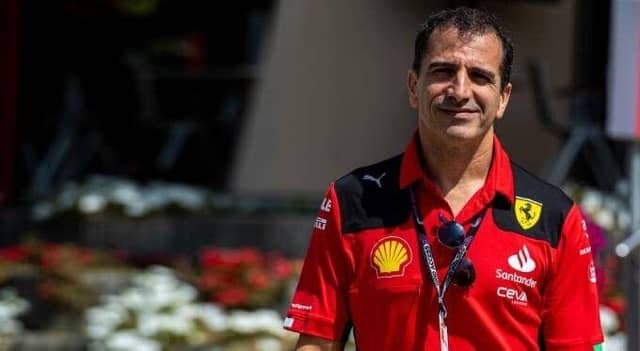

Marc Gené’s racing legacy has strong ties to Silverstone Circuit in West Northamptonshire, home of the British Grand Prix.
As a former Williams F1 test driver, his connection to this iconic motorsport region is firmly rooted in British racing history.
A seasoned Formula 1 driver turned Ferrari ambassador and broadcaster, Marc has raced for Minardi, Williams, and Ferrari, and famously won the 2009 24 Hours of Le Mans with Peugeot. Today, he is also recognised as one of the leading mental resilience speakers and diversity & inclusion speakers, drawing on years of elite performance under pressure.
In this exclusive interview with The Champions Speakers Agency, he talks about what makes Ferrari an aspirational global brand, how Formula 1 continues to drive innovation, and the importance of instinct, preparation, and mindset when making high-stakes decisions.
Q: In your opinion, what makes the Ferrari brand so special and what can businesses learn from their approach?
Marc Gené: “Okay, so Ferrari is special, okay, to start with, because it's the most successful brand in Formula 1. No one has won as much as Ferrari and, of course, that's important. Ferrari wouldn't win or wouldn't have won world championships, it wouldn't be such a desired brand.
“But that's probably not the only thing, and probably not the most important one, because almost any kid dreams—or any person dreams—one day to drive or sit in a Ferrari. So, Ferrari is a very aspirational brand.
“How have they achieved that? First, they are very proud—or we are very proud—of the origins of Ferrari. If you go to Maranello, which is where Ferrari comes from, there’ll be a lot of things that remind you from the origins of Ferrari, from where Ferrari came from, and we're very proud of that.
“We're very proud of what Enzo Ferrari founded. At the same time, it is a brand that continuously is looking for innovation, is looking for the most advanced cars, the most technologically advanced cars. So, this mix between past and future, I think, makes Ferrari cars very, very unique.
“Then, of course, the fact that it is also a very unique brand because the DNA of Ferrari comes from motorsport. Ferrari was founded as a racing company before even they founded the road cars, and probably that's unique. There’s no other road car company that really has its origins in motorsport than the T40, which, in a way, you could extrapolate that into the fans.
“Ferrari—we have probably the biggest fan base in the world, and we really take care of them, and they are so passionate. And, you know, I think passion is something that is emotion, you know, and that transcends anything.
“And then the design—the Italian design of the cars, you know—and the engine, the V12 engines, the sound. So, every Ferrari that is the new Ferrari, we always put a lot of effort into the design and we put a lot of effort into the engine. We are one of the very few brands that we still produce V12 engines. So, these things really make Ferrari very unique.
“And finally, the customers, because especially now we are trying to make sure Ferrari is a luxury brand—beyond even a car manufacturer—and we really take care of the clients. We make sure there's a community. So, it's just enjoying the brand.
“Of course, the car is the main, the most important, one of all the products Ferrari is producing. But the community—probably now even more—we are trying to put a lot of effort into the community of the owners.”
Q: How does motorsport stay at the pinnacle of technological advancements?
Marc Gené: “The governing body are making sure that the drivers are the main actors, and to do that they have to put some boundaries into the car, some limitations into the cars. Because otherwise, the cars will be too autonomous, let's say, you know, too technological.
“So, we have to—we cannot forget that the fans want to see, let's say, the gladiators, you know. They want to see the drivers, and they want to make sure that the best drivers win the race. And they want to make sure that those cars are spectacular too, and not easy to drive.
“And in order to do that, they have to put some rules into the cars. But if they put too many rules, then probably the manufacturers won't be interested. So, to find this balance between technology and the human aspect of Formula 1 is not easy. I think they're doing a very good job. I think there's a good balance. But continuously, they have to keep putting constraints into the technological part, otherwise the human aspect of Formula 1 is not important enough.
“And I think now they have a—it's a very good time for Formula 1. It's probably one of the best times of Formula 1's history because there’s a lot of drivers—or the drivers have a lot of followers—and, at the same time, there’s a lot of manufacturers.
“So, it's going very well. And yes, I think it’s a show business at the end of the day, but it’s the place where you want to make sure that Formula 1 transfers technology into the road car, which they keep doing. But the fans are coming to the races to see the best drivers—to see Leclerc and Hamilton and Verstappen, you know.
“But continuously, every year almost, they have to keep reassessing, rechecking if the rules are fine and if the sport is well balanced.”
Q: From your experience behind the wheel, where decisions must be made quickly, how do you balance risk and reward?
Marc Gené: “Yes. Normally—well, first you have to think that it's a long championship. It's 24 races. And also, quite often a DNF—which means ‘did not finish’—is when you have a zero. It may really penalise you a lot. So, you have to really think about taking big risks, because if that doesn't pay out, if you try to make an overtaking and there's contact and you have a zero, very unlikely you're going to win the championship.
“Of course, you have to take risks. You cannot just be super conservative. You're not going to win a championship doing like that. But you have to really assess at every moment: what risk do you take? The more experience you have, the more your instincts are right. And that's why young drivers tend to take—make—more mistakes than experienced drivers. Because experienced drivers, they have experience, and with experience you tend to take the right decisions.
“How can you make sure your instincts are good? Okay, experience is one thing—so just with age—but visualisation is very powerful as well. If you visualise certain outcomes, when you happen to be in that moment, you tend to take the right decision.
“So, what can you visualise? You can visualise the start, for example. And that’s the technique that we use—drivers. We visualise different scenarios in the start. You visualise that you go on the inside, you go on the outside, you go on the inside when me gets blocked—and you visualise what you do.
“And, funny enough, that shows how powerful the mind is. When you then happen to take the start and you’ve visualised different scenarios, you tend to react much quicker in an instinct way. So, you can, let's say, train your—you can work on your instinct.
“And then preparation, for example, as well. So, the more you prepare with your engineers, the more you look at video. Video analysis is very powerful. If you look at what happened in the previous years—because history tends to repeat itself over the years—not only in motorsport, I think, in anything. So, we do a lot of video analysis. This is something that I do very often, and I work now with the team showing them what happened in the past.
“And if you look at that, quite likely one of the scenarios will repeat itself. And if you have seen what happened, then you react to it. So, as I say, you have to take risks, but you have to make sure your instinct takes the right decision. And there are ways to train your instinct, to help your instinct take the right decision.”
This exclusive interview with Marc Gené was conducted by Sophia Hayes of The Motivational Speakers Agency.
For More Information: Champions Motorsports Speakers