
Councillors raise concerns about Northamptonshire's police crime panel being ‘toothless tiger’ as more transparency demanded
Councillors sitting on the Northamptonshire police, fire and crime panel have raised concerns that the group is a “toothless tiger”, as members have grappled with officers over demands for more transparency in response to the chief constable’s contempt of court finding.
Police boss Ivan Balhatchet was found to be liable at the Court of Appeal in November 2025, after the force repeatedly failed to produce body-worn footage of the arrest of Nadine Buzzard-Quashie, which took place in 2021.
Concerns have now been raised by members of the panel, which is a joint committee of West and North Northamptonshire Councils that is responsible for scrutinising the Police, Fire and Crime Commissioner (PFCC), that more information has come to light since the previous panel meeting relating to the total cost of the legal action against the police, over and above the £50,000 court sanction, and other information on the body-worn footage from the original incident.
Requests for the extraordinary meeting to scrutinise this were turned down by officers on the basis that it would not reflect the panel’s statutory responsibilities, as it strays into operational policing matters, which is not in the panel’s remit.
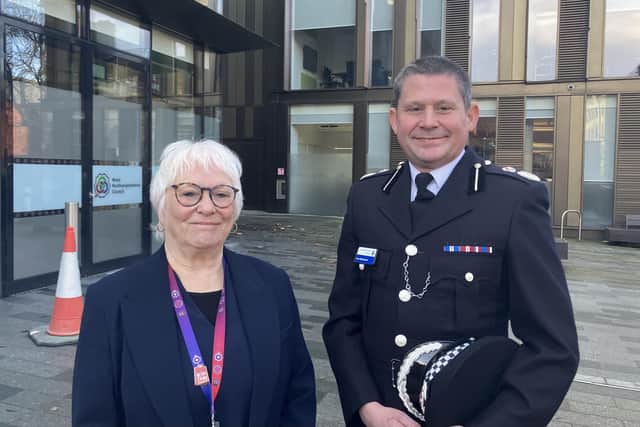

Panel member Councillor Chris Kellet, a Reform UK member on North Northants Council (NNC), told the LDRS that he felt the meeting had been turned down “on very weak grounds”.
He added: “If the Police Crime Panel want to be transparent, especially with new information coming to light, I think we should have the right to hold one. The last [extraordinary meeting] was too short to cover anything and new information has been brought to light which discredited that.
“Being on the Police Crime Panel, it’s my job to scrutinise and ask questions. What is the point of the panel if we’re not able to do that?”
Councillor Andy Sims (Reform UK, NNC) also voiced worries that the panel was “just a toothless tiger”.
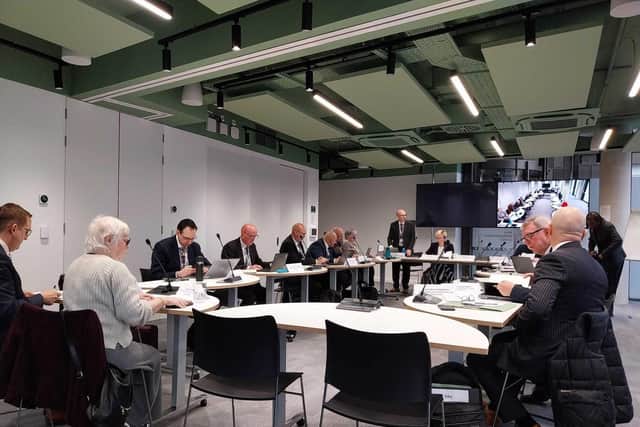
“There seems to be something just quite wrong about this,” he said. “There’s the information supplied, which wasn’t accurate, and we’ve asked for this extraordinary meeting as that gives cause for concern.
“I think there’s some questions that need answering and I don’t quite understand the prevaricating nature of not doing that.
“Even ignoring the person element of it, there’s an extraordinary financial risk that we as citizens of Northamptonshire will end up being liable for. I don’t understand the reason that we wouldn’t tackle it in a full and correct way.”
Responding to the claims that the force will be hit by a larger fee, a spokesman for the Northamptonshire Office of the Police, Fire and Crime Commissioner (OPFCC) said: “We have had some individual approaches from panel members regarding the overall court and legal costs incurred.
“Clearly there are legal costs on both sides, in addition to the sanction cost reported at the panel. We will share these costs as part of normal business, once they are confirmed.”
A WNC spokesman added: “We can confirm that the information provided to substantiate the request for a further Extraordinary General Meeting of the Police Fire and Crime Panel does not fall within its powers or operating arrangements.
“The panel’s purpose is to support and scrutinise the Commissioner and it has no remit over operational matters or individual cases.
“The Commissioner has undertaken to bring the independent review findings back to the Panel. At that stage panel members will have an opportunity to scrutinise the Commissioner further.”
The independent adviser for the investigation, who will work alongside the deputy PFCC Marianne Kimani, has been named as Patricia Richardson, who is a former Chief Crown Prosecutor.
The Commissioner’s office added: “The independent review aims to understand how and why Northamptonshire Police did not comply with the court orders that resulted in the contempt ruling by the Court of Appeal.
“It will support the Police, Fire and Crime Commissioner in holding the Chief Constable to account and give the public confidence that action is being taken to make sure this can’t happen again.”