
Water voles make historic return to Stanwick Lakes in major step towards restoring the endangered mammals to Northamptonshire
The release of more than 80 water voles at Stanwick Lakes this summer is a landmark conservation milestone for the charity and a major contributing step in restoring the endangered mammals to Northamptonshire.
The release was made possible by years of habitat preparation, partnership with the neighbouring BCN Wildlife Trust team and the dedication of the Stanwick Lakes team and local volunteers who played a hands-on role.
A new short film allows the public to follow the journey - from habitat preparation to release day and beyond - offering a unique behind-the-scenes view of this conservation project.
Community at the heart of conservation
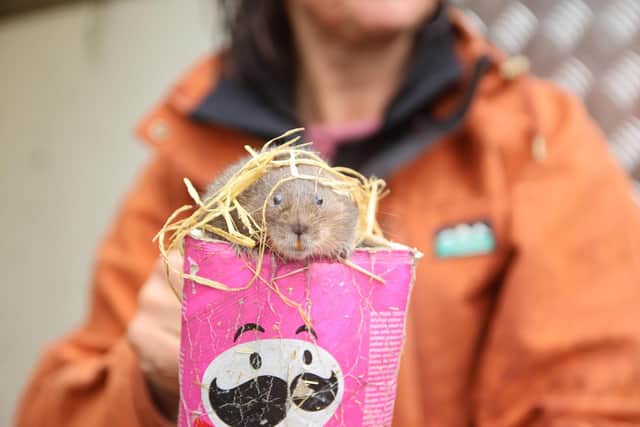

The project shows how people at every stage of their conservation journey can get involved.
More than 30 volunteers have been involved in the build-up to this point.
Local Colin Cadle’s journey started in 2021 with a simple water vole survey. In the space of four years, he’s become a core member of the volunteer team.
Colin said: “When I first came to Stanwick Lakes to monitor water vole habitats, I never imagined I’d one day help feed and release them back into the wild.
"Being involved at every stage - from those early surveys to seeing the animals settle in - has been incredible.”
For assistant ranger Isaac Manley, the release has been a series of milestones in his career - from participating in his first ever species release to delivering talks to the public about the project.
Isaac said: “This experience has given me some incredible turnkey moments early in my professional journey.
"It builds on years of habitat development by previous teams and shows the pathways projects like this can open up for young people in conservation.”
Championing people as citizen scientists
Many of those monitoring the voles are ordinary people who have been trained to take part as citizen scientists.
The wildlife volunteers and junior ranger teams have been trained and are now the charity’s advocates for engage with nature through surveying the flora and fauna.
By helping to place and monitor trail cameras and check latrine rafts for droppings, this communal effort is contributing real scientific data while more people experience conservation first-hand.
This gentle, non-intrusive approach is already paying off.
Trail camera footage shows natural vole behaviour, while droppings found on floating rafts indicate the animals are feeding and establishing themselves in their new habitat.
The story has been documented by the ranger team, who have interviewed those involved, written in-depth blogs and created a behind-the-scenes short film.
A carefully managed soft release
The voles, bred by Derek Gow Consultancy in Devon, were acclimatised in specially constructed pens along the riverbanks and islands at carefully chosen and prepared sites at Stanwick Lakes.
Once released, volunteers carried apples and carrots across the wetlands to feed them daily until the pen doors were opened.
Some voles ventured out immediately, others stayed a little longer - ‘waiting for perfect weather perhaps’ joked Isaac, as rain and wet conditions did not deter the release.
Releasing these mammals during the breeding season - some in pairs - allows established voles to reproduce quickly, giving the population a stronger foothold.
The importance of a second release
The Stanwick Lakes release follows an initial release at the neighbouring Nene Wetlands last autumn.
While the first release marked the start of the recovery effort, this second phase is vital.
Introducing voles along the riverbanks that link the two reserves helps strengthen the population, with the River Nene providing the essential corridor for their long-term survival and reconnecting fragmented populations.
Liz Williams, project lead and nature engagement co-ordinator at Stanwick Lakes, said: “This project shows the value of collaborative conservation.
“Working with the Wildlife Trust has helped us create the best conditions for these water voles to thrive. Involving volunteers and the public also fosters a sense of stewardship for our native species.”
Restoring a lost species
Water voles are key to healthy riverside ecosystems - their burrowing and grazing create space for other wildlife to thrive.
A species once widespread across Northamptonshire, they have suffered devastating declines, disappearing from 94 per cent of their former range nationally.
Their return to Stanwick Lakes is a major step towards reversing that loss.
The release was funded and licensed by Natural England as part of its Species Recovery Programme and delivered in partnership with the Wildlife Trust for Bedfordshire, Cambridgeshire and Northamptonshire and Stanwick Lakes.
This collaborative approach ensures each phase - from habitat preparation to release and long-term monitoring - gives the animals the best chance to succeed.
Get involved
Stanwick Lakes welcomes new volunteers for ongoing conservation work including water vole monitoring.
To find out more, visit www.stanwicklakes.org.uk, report water vole or other species sightings to [email protected], or support the project through donations.