
'Toxic Town' lawyer calls for public inquiry saying council 'cannot outrun responsibility' for waterway pollutants in Corby
‘Toxic Town’ solicitor Des Collins, lawyer to campaigners concerned about the health impact of dumped Corby steelworks’ waste on residents, has called for a public inquiry after a Corby-wide citizen science water testing project.
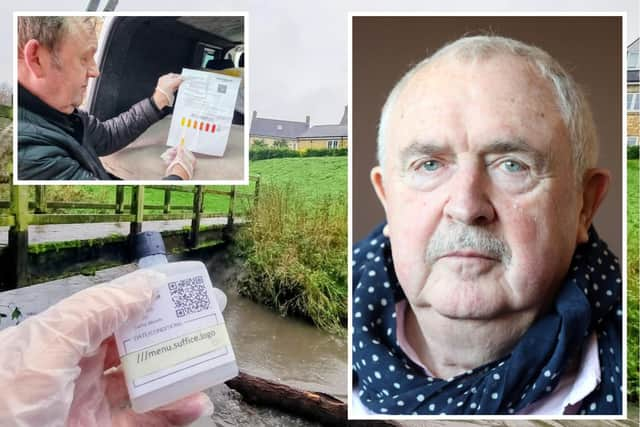
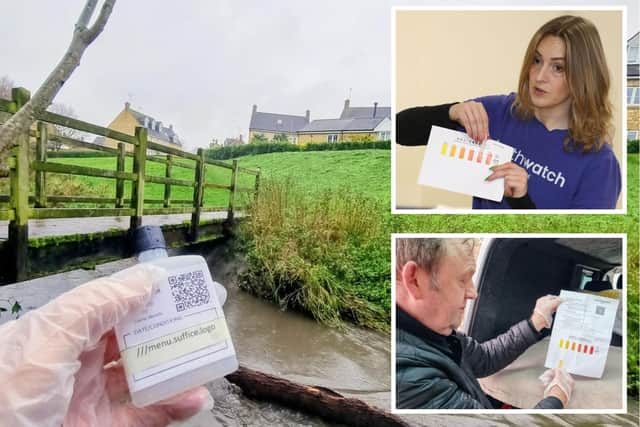
This month, report from environmental charity Earthwatch Europe, produced in partnership with the community, identified the presence of metal pollution in Corby's rivers.
The study involved 35 volunteers testing 59 freshwater sites across Corby in November 2025 showing pollutants at levels that could pose a risk to aquatic life.
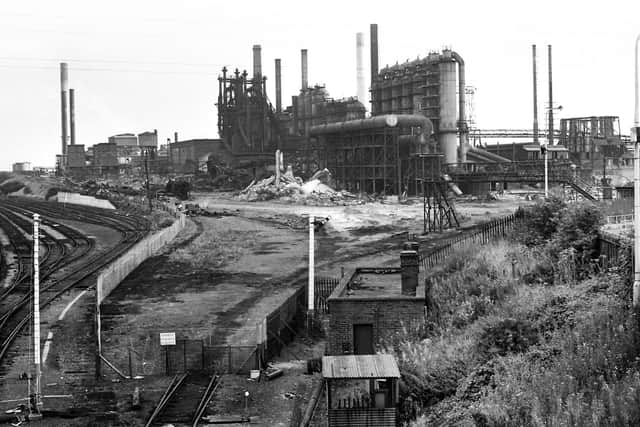
North Northamptonshire Council (NNC) inherited waste dump issues from Corby Borough Council – the legacy authority left with a £14.6m toxic contamination compensation bill from a botched clean-up of the steelworks.

Regular water testing is carried out by the Environment Agency (EA), in Corby but has admitted they did not monitor heavy metals in rivers in 2025.
A spokesman for NNC said: “North Northamptonshire Council takes environmental concerns extremely seriously. We have reviewed the Earthwatch Europe report in detail and discussed its findings directly with the Environment Agency (EA), who are the principal authority for the regulation of controlled waters, including surface water quality.
“The EA has advised that the initial data does not indicate a significant impact upon the freshwater ecology and they will continue to carry out statutory monitoring in the area.
“From the council’s perspective, there is currently no evidence of a pollutant linkage or unacceptable risk to human health requiring action under its statutory duties.
“We will however continue to monitor the situation very closely, keep talking with partners, and ensure residents are kept informed if further information becomes available.”
Des Collins, lawyer to Corby campaigners concerned about the health impact of toxic waste on local children and young adults said in response: “The council (NNC) seeks to disclaim responsibility for pollutants in the waterways around Corby, yet it was responsible for ensuring the steelworks’ toxic waste was properly disposed of thirty years ago that is the cause of all this concern and it cannot outrun that responsibility.
"Nor can the council ‘monitor’ the impact of pollutants in the water if it does not commission its own testing. Rather than denigrating the community’s efforts to test for the existence of heavy metals in the water, the council itself must act, given the havoc that has been caused to the local community’s health over the years.
"We have repeatedly asked the council to confirm exactly where they dumped the steelworks’ waste and we are constantly stonewalled.
“There can be no better case for a public inquiry. We must expose and stop the coverup that is going on in Corby right now.”
The Environment Agency (EA) welcomed the work undertaken by Earthwatch Europe but ruled out ‘additional monitoring’ in a written reply to Cllr Mark Pengelly (Lab/Lloyds and Corby Village) in his role on NNC.
Pointing to the difficulty comparing Earthwatch Europe data with EA data due to ‘sampling approaches, analytical methods and freshwater quality standards’, the EA said they ‘did not monitor heavy metals in rivers near Corby in 2025’.
The EA said: “The report identified elevated levels of certain heavy metals. These exceedances were based on single, one-off samples, which do not meet the sampling frequency required to demonstrate a sustained breach of Environmental Quality Standards (EQS). EQS values are the regulatory benchmarks we use under the UK Environmental Quality Standards Directive (EQSD).
“A single water sample reflects conditions only at the moment it is taken. Water quality can vary significantly due to rainfall, pollution incidents and other environmental factors. Identifying long-term issues typically requires multiple samples collected over several years and assessed against appropriate environmental standards, ensuring that investigations focus on areas of greatest environmental risk.
“Our analysis of invertebrate data from the area shows no evidence of the types of ecological effects that would normally be expected if heavy metal pollution were present at harmful levels.
“We also note that the study assesses risks to aquatic life only and does not consider risks to public health.
“In summary, the initial results do not indicate any significant impact on the freshwater ecology. We recognise the importance of continued vigilance, and we will maintain our statutory monitoring in the area. Based on the evidence available at this stage, no additional monitoring is planned as a result of this report.
“We understand the concerns arising from past pollution issues in Corby, and we appreciate how important it is for residents to feel confident in the quality of their local environment.
“We remain committed to working collaboratively with Earthwatch and other partners to explore how further citizen science initiatives could support environmental monitoring and contribute to ongoing improvements in the Corby area.
“Our role is to provide technical guidance where helpful and to ensure that any data collected is robust, reliable and contributes meaningfully to our shared understanding of the local environment.”
Last week, North Northants Council leader Cllr Martin Griffiths (Reform) told the NN Journal the authority would ‘fully review’ Earthwatch Europe’s findings but in his opinion he thought the people of Corby had ‘almost had enough of it’.
He said: “It's like the people of Corby have almost had enough of it. I get the feeling most people are proud of Corby and they want to move on from it.”
On Wednesday (January 21), Corby Town Council (CTC), agreed a motion unanimously calling for further testing of waterways as recommended by Earthwatch Europe.
Town councillors backed the Lib Dem motion saying urging NNC to ‘engage fully and openly with campaigners’.
They agreed that CTC:
“Resolves to work with all those involved in seeking those answers.
“Urges North Northamptonshire Council to engage fully and openly with local people campaigning on this issue and to provide them with answers to the questions they are asking.
“Calls upon all organisations with responsibility for the management and safety of contaminated waste sites associated with the clearance of the Steelworks site to work together to ensure that the required further testing takes place as a matter of urgency.”