
Reform-led North Northamptonshire Council scraps climate change 2030 commitment despite strong opposition
North Northamptonshire Council (NNC) has officially voted to push back its carbon-neutral targets by two decades despite strong disapproval from opposition members.
The Reform UK executive was advised by officers to shift back its zero emissions commitments from 2030 to 2050, coinciding with the UK government’s legally binding target.
A report highlighted that, despite slight reductions being made in recent years, the authority had not yet hit its annual carbon reduction trajectory of 2,000 tonnes per year.
Speaking at a meeting today (Tuesday, September 9), NNC leader, Cllr Martin Griffiths, said it was the ‘right move for our community, our finances and our future’.
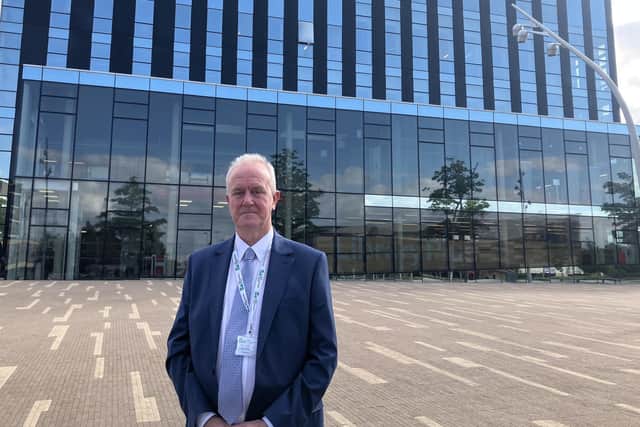

He said: “Delaying the target doesn’t mean delaying action, it means prioritising the most impactful projects first, like modernising council buildings and securing external funding.
“These allow us to reset the target and continue delivering the carbon management plan.”
‘There is no reason to politicise climate change’
Addressing the council chamber, leader of the local Green Party Cllr Emily Fedorowycz said: “Pushing our council’s net zero target from 2030 to 2050 will shape not just the years ahead, but decades to come.
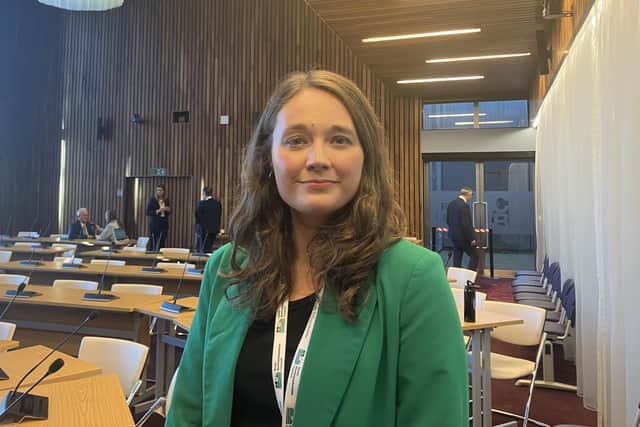
"Choose to delay today and that damange cannot be undone. There is no reason to politicise climate change.
“In the scrutiny meeting last week, every party except Reform recognised the risks of moving these goalposts. Net zero is an opportunity for North Northants for lower bills, stronger businesses, better jobs, transport and investment in homes.
“The evidence is clear - councils with ambitious targets have secured millions of government funding. You each have a responsibility today to not do what is right by your party, but to do what is right by your people.”
She also highlighted the fact that 95 per cent of the authority’s carbon management plan (CMP) was either already delivered or on track to be delivered by 2030 as reason to continue on the current path.
Joining the calls, local student Esther Hobbs pleaded with the executive to do their part to preserve net zero. She was selected earlier this year to represent the UK at the ‘Your Europe, Your Say’ (YEYS) two-day conference in Brussels.
She said: “This council’s choice will directly impact its residents’ homes, businesses and livelihoods. The climate crisis is one of the most important issues for young voters today.
“Net zero is not a petty hypothetical waste of money, it’s a safeguard to ensure that I, and your own children and grandchildren, grow up with the promise of a world to inherit.
“Delaying it is far more expensive and risks losing finance and investment that ambitious councils are already securing.”
‘It makes net-zero logical sense’
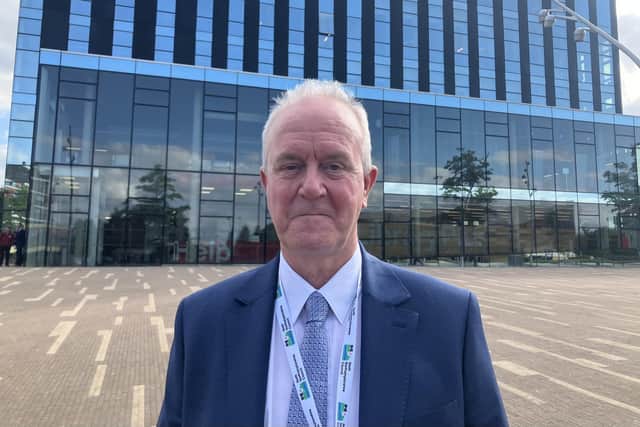
However, Cllr Trevor Conway (Reform UK), who chaired the cross-party scrutiny review into the issue last week, pointed to their supported recommendation to delay the targets by two decades.
He said: “It makes net zero logical sense to continue striving to achieve a 2030 date that is neither financially or realistically viable.”
The officers’ report highlighted that if the 2030 date remained in place, financial investment would need to ‘increase significantly’ to ensure emissions are reduced as much as possible to avoid the costly offsetting of its carbon footprint.
According to July 2025 estimates, if the council were to offset its emissions today, with no further work undertaken, it would cost around £837,000.
Offsetting costs would then need to be paid annually, although the amount would change if operational emissions decreased.
Executive member for assets, waste and environmental services, Cllr Ken Harrington, also said there was “no point in trying to achieve unrealistic deadlines that will almost certainly end up costing council tax rises”.
He added that the move would not abandon the council’s environmental responsibilities, but rather ensure that green initiatives were ‘financially and environmentally sound’.
A unanimous decision, which was solely in the hands of the administration’s executive members, to delay the targets to 2050 was passed.
Work will now commence to revise existing delivery dates of all CMP activities and regular updates will continue.
In a risk section of the report, NNC flagged concerns that not continuing to progress the CMP would leave the council exposed to further fluctuations in energy costs, ageing buildings which become more costly to run, technology and vehicles.
It also added that it could potentially deter investment in the area, with clean energy industries likely to be targeted for significant public funds, and lead to ‘fragmentation of effort with climate actions’.
In a statement criticising the decision released after the meeting, deputy leader of the local Labour Group Cllr David Baker, said: “No-one has suggested the 2030 date should never be reviewed.
"But to rip it up now, without any proper understanding of the consequences, smacks of a complete lack of transparency, integrity and accountability.”