
Plans for solar farm across north Northamptonshire – report on findings from consultations published by applicant Island Green Power
Island Green Power, the company behind the proposed solar farm across eight sites around north Northamptonshire villages, has published a new report into the findings from its public consultations held in March and May this year.
At a consultation in Mears Ashby in March, local people grilled the applicant about all manner of issues that could be affected by the implementation of a solar farm.
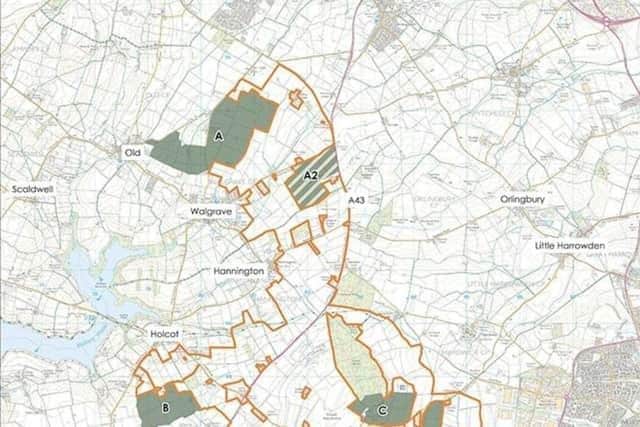
The new report, published on September 30, hopes to consolidate those queries, and outline several key issues raised by people who attended the consultations in the spring, including concerns about the size, scale and the potential for the 2,507 acres of solar panels to disturb the natural beauty of the area.
An Island Green Power spokesman said: “The proposals for the project will be developed in line with planning policy, according to feedback from public consultations and findings from environmental and technical assessments.
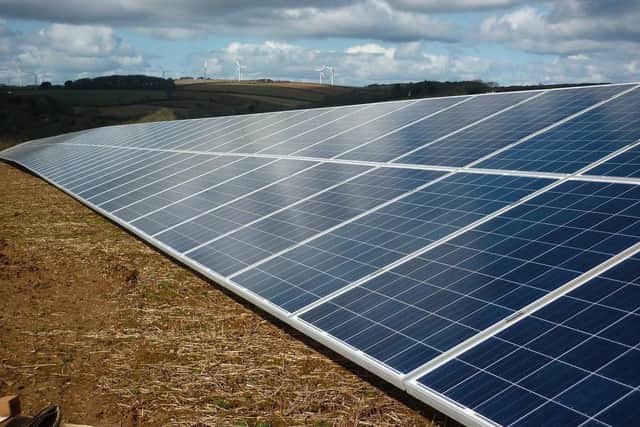

"At every stage, we are committed to working with the local community, businesses and stakeholders to mitigate the impact of the project and deliver lasting benefit.”
Comments made by locals highlighted the concern about the impact on the landscape and its overall character, including the project’s visual impact.
At one of the consultations in the village hall, Juliet Jarvis, a Grendon resident and member of the Working Party for Solar Development, called the issue ‘enormous’.
She said: “What you’re planning to do in Grendon will completely transform our fields in every way. You’ll just fundamentally change our homes.
"This will have such a significant impact on our villages.”
Chaz Beaumont, a resident of Easton Maudit, said: "I don’t see a benefit at all, just a lot of destruction. I bought my house here in this nice village to retire to, and in five years of living here this appears.”
Solar panels currently take up 0.1 per cent of the UK’s land, and government plans would require no more than 0.3 per cent in order to provide about 12 per cent of the UK’s energy needs.
If approved, Green Hill Solar Farm would be operational for a 60-year period, which the report indicates people at the consultations said was ‘too long.’
It also indicated that attendees to the consultations raised concerns about the local ecology and biodiversity, including the habitats of local wildlife such as water voles and otters.
Habitats and species surveys are being carried out to assess the potential impact, and the report notes that solar panels in rural areas can even wield benefits for the natural land.
It says: “Ground-mounted solar projects provide significant environmental benefits. In addition to providing renewable, low-carbon energy – which is good for the planet – they also improve biodiversity locally by creating new habitats for wildlife and letting plant life grow around the panels over time, compared to harvesting crops yearly.
“Solar farms have been proven to be able to deliver considerably higher levels of biodiversity net gain (BNG) compared to other types of development and our proposals for GHSF will be no different.
"GHSF will be designed to minimise the impact on ecological features through their retention and enhancements such as mitigation planting and landscaping where possible.”
To date, 1,276 people have signed a petition set up by former leader of the Borough Council of Wellingborough, Cllr Martin Griffiths, who believes that the community should have a say on how the local area handles the transition to renewable energy sources.
He said the plans are on an ‘unprecedented scale’ and that they could have ‘a significant impact on our local environment and way of life.’
Finally, a spokesman said: “We are considering the feedback received at the workshops to refine and evolve the more detailed layout and design.
"A more detailed draft plan for Green Hill Solar Farm will be published for the public to comment on as part of our statutory consultation, anticipated to take place later in winter.
"This is when we will invite the local community to attend a variety of events, meet the team and provide further feedback.”
The full workshop summary report can be found here.