
Hospital handcuffing of Wellingborough HMP Five Wells paedophile, 87, with acute myeloid leukaemia ruled as 'disproportionate'
HMP Five Wells whose officers handcuffed a dying 87-year-old paedophile as he was receiving hospital treatment has been admonished in a report into his death.
Inmate Henry Day (known as Harry) had been moved to the Wellingborough G4S-managed ‘super prison’ in March 2024 to finish his sentence after being convicted in 2009 of 20 sexual offences, including gross indecency and incitement against eight boys between 1969 and 1986.
Self-styled former youth leader Day was jailed for a further three years in 2016 after admitting seven offences of indecent assault against four victims who were all under the age of 16 at the time.
Criticism of Day’s treatment while in the care of HMP Five Wells staff came in a report by Prisons and Probation Ombudsman, Adrian Usher, describing the treatment by prison staff as 'disproportionate' despite findings of a previous investigation that had identified the ‘inappropriate use of restraints’ on a ‘very unwell prisoner’.
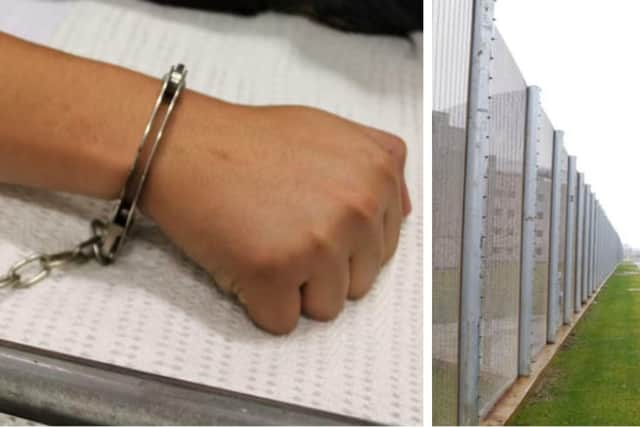

Mr Usher said: “In our view, the decision to restrain Mr Day was clearly disproportionate.
"We consider that restraints should not have been applied to Mr Day when he was taken to hospital on August 14, given he was 87-years-old, with poor mobility and poor health.
"Mr Day then remained on an escort chain for six days in hospital. A risk assessment dated August 17 noted that Mr Day was bed-bound. We can see no justification for using restraints on Mr Day given the negligible risk of escape.”
The Prisons and Probation Ombudsman aims to make ‘a significant contribution to safer, fairer custody and community supervision’ for inmates, by carrying out independent investigations into deaths, due to any cause, of prisoners.

Day died in a hospice of leukaemia on September 25, 2024, while a prisoner at HMP Five Wells when he was 87-years-old.
Mr Usher said: “We offer our condolences to his family and friends. The clinical reviewer concluded that the clinical care Mr Day received at Five Wells was equivalent to that which he could have expected to receive in the community."
But he added that the decision to apply restraints to Day when he was taken to hospital on August 14 and to leave him in restraints for the next six days while in hospital, was ‘not justified’ given his age, his poor mobility and poor health.
Following advice from the out of hours GP, Day was taken to hospital. He was accompanied by two prison officers who applied single cuffs – where a set of handcuffs is used to attach a prisoner’s wrist to an officer’s wrist.
In the early morning of August 15, once Day was settled in a hospital bed, officers changed the restraint from single cuffs to an escort chain – a long chain with a handcuff at each end, one of which is attached to the prisoner’s wrist and the other to an officer’s wrist.
That day a nurse helped Day move from one bed to another and helped him to sit up in bed – 48-hours later a prison risk assessment described Day as being ‘bed-bound’.
A prison manager authorised that no restraints should be used on Day and staff removed the escort chain on August 20.
While in hospital, Day was diagnosed with acute myeloid leukaemia – a cancer of the white blood cells – and treated. He was returned to Five Wells on August 22.
After being returned to hospital following a decline in his health, he was then transferred to a hospice on September 17, where he stayed until his death on September 25.
Recommendations in the report have said that the prison governor (known as the director) should ensure all staff undertaking risk assessments for prisoners attending hospital understand the legal position on the use of restraints.
Mr Usher added: “Mr Day was the third prisoner to die at Five Wells. The two previous deaths were from natural causes. In a previous investigation, we identified the inappropriate use of restraints on a very unwell prisoner. The prison told us that security managers would deliver training to staff on the legal position for the use of restraints.
“The Prison Service has a duty to protect the public when escorting prisoners outside prison, such as to hospital. It also has a responsibility to balance this by treating prisoners with humanity.”