
Hosepipe ban for Northamptonshire to remain in place as drought continues for East of England
Anglian Water has said the hosepipe ban introduced back in July for Northamptonshire and the surrounding areas will remain in place for now.
The region officially remains in drought, with several months of consistent rainfall needed for rivers, reservoirs and groundwater sources to make a full recovery.
While residents are being urged to keep adhering to the hosepipe ban, Anglian Water says it is continuing to invest in its water network to keep taps flowing for years to come.
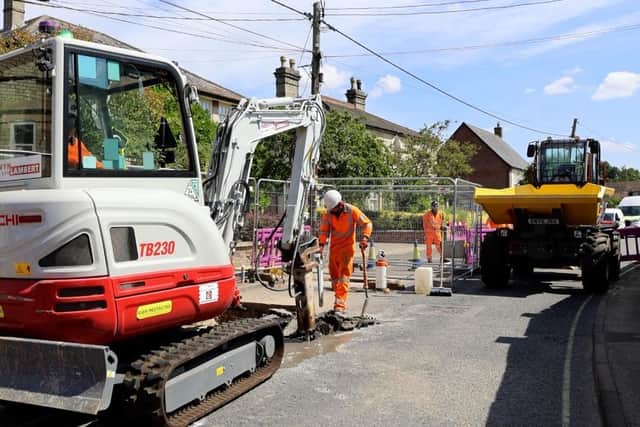

This work includes installing hundreds of kilometres of new pipes across its network and progressing plans for two new reservoirs and a desalination plant.
Investing for the future
Anglian Water’s region is one of the driest in the country and it’s also one of the fastest growing, with more than 720,000 new residents expected by 2043.
Experts at the company have been working for decades to make the East of England more resilient to drought.
With the impacts of climate change becoming more pronounced every year, Anglian Water says it is continuing to invest in new water supplies, so that it can keep taps running for generations to come.
Massive infrastructure upgrades, such as the company’s strategic pipeline, are already starting to deliver huge benefits for drought resilience in Ipswich and Colchester.
In the longer term, planning is already well under way for two new reservoirs in the East of England - one in the Fens and one in Lincolnshire.
The third phase of public consultation on the Lincolnshire reservoir is set to begin later this month, while feedback from the third phase of consultation on the Fens reservoir was published in April.
Technical partners have been procured for two proposed desalination plants, which would turn seawater into treated drinking water, offering a drought resilient option for future water resources.
Finding and fixing more leaks than ever
Hot and dry weather doesn’t just affect how much water is available – it can also put extra pressure on the water network, leading to more bursts and leaks.
This is because the exceptionally dry ground shrinks and moves, causing shifts underground which can move pipes out of place and break them.
With more leaks being reported than ever, Anglian Water says it has fixed 44 per cent more leaks than it did in summer 2025 – around 800 leaks a week.
More than 1,000 people across the water company are focused on leakage, working around the clock to find and repair leaks as quickly as possible.
Despite repairing almost 13,000 leaks by the end of August, teams are still facing a significant backlog as autumn gets under way.
Some of this leakage is due to ageing infrastructure. 145km of water mains have already been renewed since 2025, as part of Anglian Water’s largest mains renewal programme in more than 20 years, and teams are targeting a further 225km this year. The programme, which represents a £348 million investment to replace 1,134km of pipes by 2030, is estimated to reduce leakage by 940 million litres a year once complete.
Ian Rule, director of water services at Anglian Water, said: "Renewing ageing water mains is essential to improving network resilience, reducing leakage and supporting the long term needs of customers and communities across our region.
“As we’ve seen this summer, climate change is making this hot, dry weather much more frequent.
"Operating in the driest part of the country, we’ve long been focused on drought resilience at Anglian Water – but it’s no easy task.
"We’re already making good progress through our largest ever investment plan, but we know we need to do more.
"That will require water companies, Government and regulators to work together to enable significant investment over many decades to ensure we have secure supplies of water in the face of our changing climate.”
Drought set to continue into spring 2027
Anglian Water says that, although we’re now seeing cooler temperatures and some rainfall, the impact of drought is still being felt in the region’s environment and water resources.
This comes after the Environment Agency announced last month that East Anglia was likely to remain in drought until spring 2027.
At the end of September, the East of England had experienced seven consecutive months of below average rainfall.
This March to September period is the driest since records began in 1899, with the region seeing just over half of its long term average rainfall (51 per cent).
The Met Office has said that this summer was also the hottest on record for England.
The Environment Agency declared a drought for the East of England at the end of July, with the rest of the Anglian Water region being moved to drought status on 10 August. Anglian Water announced a hosepipe ban on July 10.
This exceptional weather followed a dry 2025, when the East of England experienced its driest spring and summer since the famous drought of 1976.
The water company’s experts typically expect autumn and winter rainfall to replenish resources, so that extra water can be stored for the drier spring and summer months.
But after two consecutive years of prolonged dry weather, river flows, reservoir and groundwater levels in the region are lower than they should be for this time of year. Most sources continue to decline whilst some sources are still at record lows for the time of year.
During the hottest days this summer, across five separate heatwaves, Anglian Water supplied a third more water than usual to keep up with heightened customer demand.
As a result, despite some rain last autumn and winter, the last few months of hot and dry weather have meant resources are being used up more quickly than they can be replenished.
Laura Tuplin, programme manager for long-term drought resilience at Anglian Water, said: “We're now in October and while summer is behind us, the impact of the hot and dry weather is still here.
"We’ve started to see some cooler temperatures and rainfall over recent weeks, but drought conditions don’t end overnight. It takes sustained rainfall over a longer period to replenish rivers, groundwater and reservoir levels after such a prolonged dry spell.
“We’ll need more rainfall during the winter than we’d normally expect to bring river, reservoir and groundwater levels back to where we’d need them to be. This means that we’ll need to keep the hosepipe ban in place for now.
“Our teams will continue to carefully monitor rainfall, river levels, groundwater and demand for water, and we'll only consider lifting restrictions when we're confident conditions have improved enough to do so.”