
Efforts targeting notorious fly-tipping hotspot in Northamptonshire village finally paying off
A prominent and ‘highly problematic’ fly-tipping hotspot in Earls Barton is being addressed by closing the layby and gating it off to prevent unlawful access.
The layby, which is on the A4500 approaching Earls Barton from Ecton, has been problematic for ‘many years’ with fly-tipping and anti-social behaviour.
But North Northants Council (NNC) has now teamed up with Northamptonshire Police and Northamptonshire Police, Fire and Crime Commissioner Danielle Stone to put an end to the persisting problem.
The project, funded by the Office of the Police, Fire and Crime Commissioner (OPFCC), North Northamptonshire Council and a private landowner, has resulted in the council closing the layby, gating it off to prevent unlawful access.
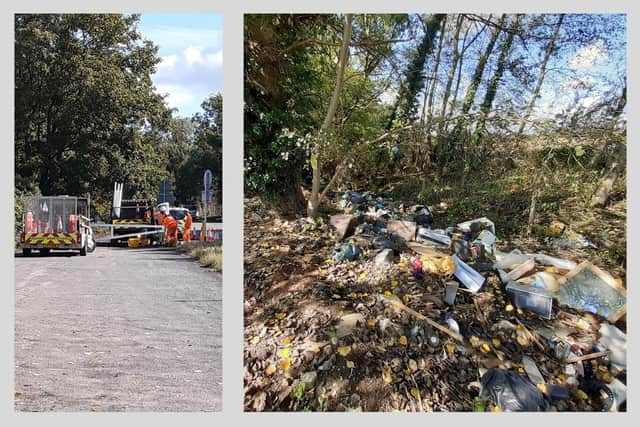

Cllr Ken Harrington, the council’s executive member for assets, waste and environmental services, said: “Targeting vulnerable locations like this one is a key part of what our waste team do, particularly when fly-tipping is having a negative impact on the community and the environment.
“This is an excellent example of partnership working in practice. This location was a known fly-tipping spot and officers have worked closely with partners, including the landowner, to find a solution.
"Closing off this layby has helped prevent unlawful access, protected the land nearby and stopped fly-tipping and associated anti-social behaviour.”
In previous instances, the council has used covert cameras at the site, where several offenders were caught throughout 2024 and 2025, being fined between £500 and £1,000.
NNC says there has been no further fly-tipping at the location since the gates and a soil bund were installed in late 2025.
Danielle Stone, the Northamptonshire Police, Fire and Crime Commissioner, added: “Fly-tipping is an offence which blights our communities and ruins our environment.
“We must work together to tackle it, and I am pleased that alongside our partners we have funded preventative measures which have reduced crime, removed fire hazards and have made the site safer.”