
Councillor grilled by Raunds residents on the state of town’s roads
Questions concerning the state of roads and frequent potholes in Raunds have been put to North Northants Council’s executive member for highways and travel.
Cllr Chris McGiffen took the role of overseeing highways and travel at North Northants Council (NNC) after being elected to the council in May 2025.
In February this year, Raunds Town Council penned a letter to Cllr McGiffen pointing out the ‘significant damage’ that had been done over time to the likes of Brick Kiln Road and Thorpe Street and the frustration that has resulted in part to the repair costs for vehicles affected by potholes (most of which are deeper than 30cm, according to Raunds Town Council).
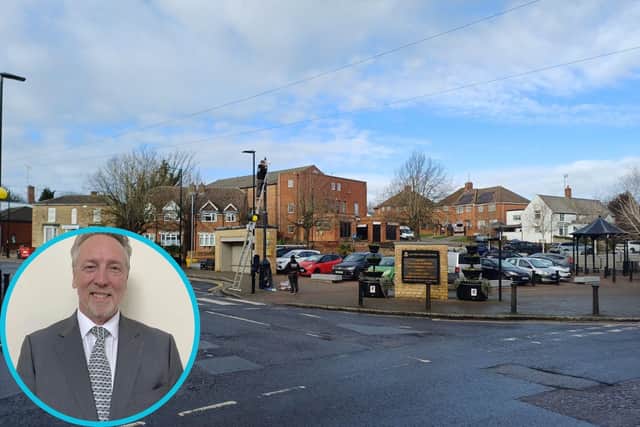

At the annual town assembly, Cllr McGiffen answered questions submitted in advance, assuring people that ‘Raunds is getting as much attention as everywhere else’ despite ‘chronic underfunding’ meaning defects in the roads must be prioritised using a risk-based methodology.
He said: “Because potholes are caused by a mixture of sub-soil movement (especially in winter) and are amplified by rainfall and heavy traffic, they can sometimes deteriorate before they are repaired.
“If a defect fails within two years it is repaired at the contractors expense with no cost to the taxpayer. Sometimes defects do fail but it tends to be the road immediately around the defect which fails, this is because the repair itself is stronger than the worn-out road.
"Councils have a statutory defence due to the geological and atmospheric nature of how defects occur, which are largely outside their direct control.
"However, councils are required by law to have a robust inspection and maintenance regime in place to demonstrate that they are taking all reasonably practicable steps to maintain the highway and protect the safety and property of motorists, pedestrians and other road users.”
According to North Northants Council, to be considered a safety defect a pothole needs to be at least 40mm deep on busy roads and 50mm deep on local roads.
Road surfaces are designated response times based on the severity of the defect and how much of an immediate risk it poses.
The response is within two hours, with lower priority fixes having a response time of up to 90 days, after NNC updated its Highway Inspection Maintenance and Response Framework (HMIRF) last month to provide clearer investigation triggers and categorisation for defects.
The council says this will be reviewed annually to ensure that the plan is up to date.
One question related to the state of Thorpe Street in particular, which Cllr McGiffen said would cost approximately £30,000 to repair the defects, pre-patch the surface then apply the surface dressing, and that it ‘is not a main arterial route’, so would qualify for surface dressing ‘at some point.’
When quizzed on the priority of Raunds community speed watch recording minor speeding offences over recording and addressing potholes, Cllr McGiffen said: "These do have an impact and help to remind drivers they are speeding. I have just read some research that states they reduce mean speeds by between 2.6 and 7.1mph and significantly reduce the number of motorists exceeding the speed limit.”