
Corby EMR train sped past red signal before fatal crash near Bedford
An interim report into the fatal crash involving two passenger trains near Bedford has revealed one of the trains sped up past a red light moments before the collision.
The Rail Accident Investigation Branch (RAIB) has released details of the crash that took place at about 5.13pm on Friday, June 19, this year.
Both trains – East Midlands Railway (EMR) services – were travelling south to London.
The Intercity 810-type train had left Leicester station and had called at Kettering, its last station call before the accident, passed non-stop through Bedford station.
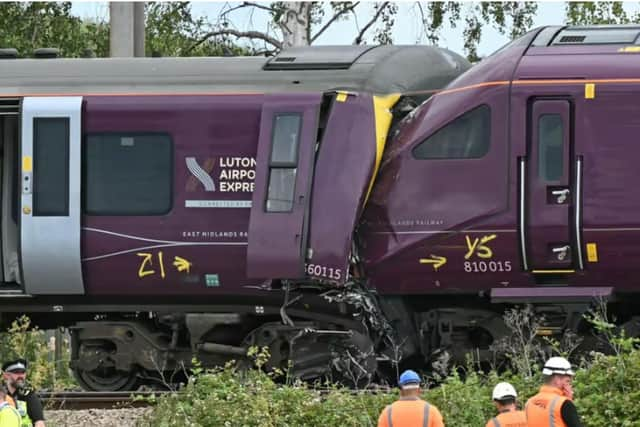

A 360 Connect train left Corby and stopped at Kettering, Wellingborough and Bedford to pick up passengers – the 360 train crashed into the back of the stationary Intercity train.
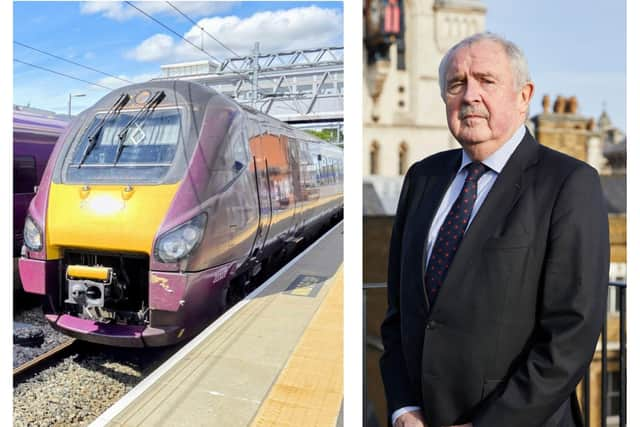
Des Collins, senior partner at Collins Solicitors and lawyer to a number of Bedford rail crash victims, said: “Collins’ clients who fell victim to this summer’s Bedford rail crash will be pleased that the RAIB has today issued a relatively swift interim report into its causes.
"We will now be advising these clients on their legal options in light of these findings.
"While we recognise there is much more to be determined as part of the detailed and meticulous investigation into where ultimate responsibility lies, it is already clear from today’s report that the fact of a signal passed at danger (SPAD), was compounded by a lack of a Train Protection Warning System (TPWS) on that stretch of railway.
"This system is specifically designed to automatically bring a train to a safe stop, which would have prevented this accident.
"What appears troubling is Network Rail’s assessment that there was no need for a TPWS in that area which they deemed as low risk.
"Yet again, the lessons of Paddington and Southall Inquiries have failed to be implemented, to the detriment of passengers.”
Train driver Shaun Burton, 60, was killed and a further 160 people were injured.
Investigations are continuing into the reasons why the train driven by Mr Burton passed a red danger signal.
On-board data recorders found that the brakes were applied around 10 seconds before the collision decelarating the train from about 76 mph to 50mph when it crashed.
RAIB will continue to investigate the actions of those involved and any factors that may have influenced them, why the 360 train passed a signal at danger, the status and performance of the braking, and other safety systems.
The full report will also look into the reason why the Intercity train was stopped, the status of a vital signal and its ‘positioning, visibility, and conspicuity’.
Mr Collins added: “We invited both East Midlands Railway and Network Rail to accept liability in principle and efforts are ongoing in that regard. Our priority is to ensure swift passenger compensation for their injuries and losses. Early-stage liability admissions allow for swift and seamless interim claims for financial relief, such as extended sick pay to allow victims to cover their household expenses whilst unable to work.
“The full extent and scope of final compensation claims will be calculated individually once the final report is issued and the severity of injuries and other losses are taken into account.
“We recommend anyone affected by this incident takes a look at Collins’ Transport Litigation pages on our website as a first step towards understanding their options.”