
Dr John Smith: My thoughts on the failure of the assisted dying Bill
I am writing this with more than a degree of trepidation. As you read it I hope that you will read on, whatever feelings it provokes in you, and ultimately I hope that at its end you will be reassured.
The Terminally Ill Adults (End of Life) Bill failed in the House of Lords last week when it ran out of time.
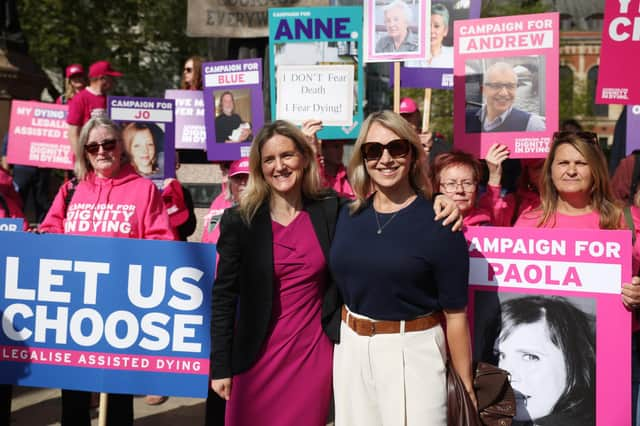

It would have allowed mentally competent adults with a life expectancy of less than six months to be assisted to end their lives, subject to approval from two doctors who would be overseen by a panel that would include a lawyer, a psychiatrist (also a doctor) and a social worker.
There would also have been a ‘cooling off’ period allowing for a change of mind.

The fall of the Bill has provoked both anger and disappointment. There is no harm in being angry, but there is when it misrepresents what dying is like.
And underlying that anger is the dreadful assumption that we die in pain, that dying is painful and that we will all die in pain.
Some examples:
‘By blocking this Bill, a handful of peers forced terminally ill patients to suffer, however much agony their disease created, however long it lasted.’
‘For those of us who have witnessed our loved ones dying in agony, it looks more like torture.’
‘Everyone should have the choice to die without pain.’
‘How many more people will die in needless agony?’
There you have it – agony, pain, torture.
I cared for many thousands of dying patients – in my clinic, in the hospice, the hospital and at home.
My patients did not die in pain, it would have been a terrible failure if they did.
Many dying patients do not have pain in any case. But because it is an assumption that they will, they fear it.
There is so much more that needs to be and that can be addressed – fatigue, anorexia, breathlessness, weight loss, sadness, for example.
Now, I am not saying that dying patients do not have difficult symptoms that are not treated; there is not a level playing field.
Many of us want to die at home but that needs 24-hour care, and 24-hour access to skilled advice.
Many of us end our days in hospital and yes, even in hospital corridors, because of this lack of 24-hour care.
Many hospices are simply not big enough. People cannot be cared for in the place they choose. But things can change, and will change.
Had the Assisted Dying Bill passed it would have further exacerbated this lack of choice in care.
Only those wishing to die would have had their choice fulfilled – and that would be profoundly wrong.
Dementia is now, I think, the commonest cause of death and dementia patients would also, of course, have no choice.
I do hope that you have managed to reach the end of this column.
There is so much more that I could and should say but if I have done anything I hope that I have removed some of the fear that you may feel.