
Corby's childhood cancer rates being examined by public health bosses after renewed pressure following screening of Toxic Town

Corby’s childhood cancer rates are the subject of an investigation by the area’s Director of Public Health after parents asked her to respond to their concerns.
Several groups of parents in the town have begun raising worries over their children’s cancers following the screening of Toxic Town on Netflix earlier this year.
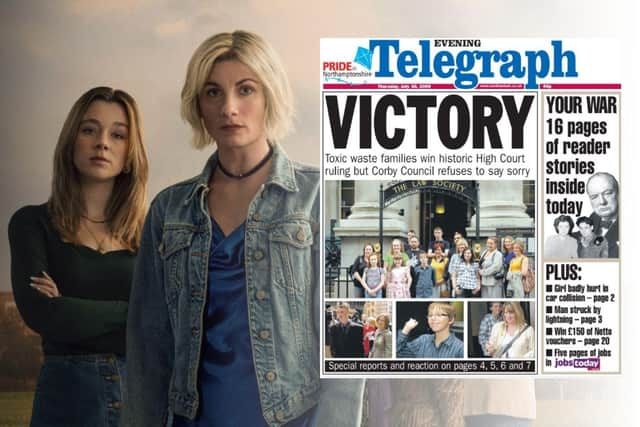
The drama looked again at the scandal of the council’s botched clean-up of the town’s steelworks, which led to a cluster of birth defects and a High Court case that cost Corby Council millions.
Many parents have since become concerned that their own children have been affected – and continue to be affected – by cancers and other serious health issues.
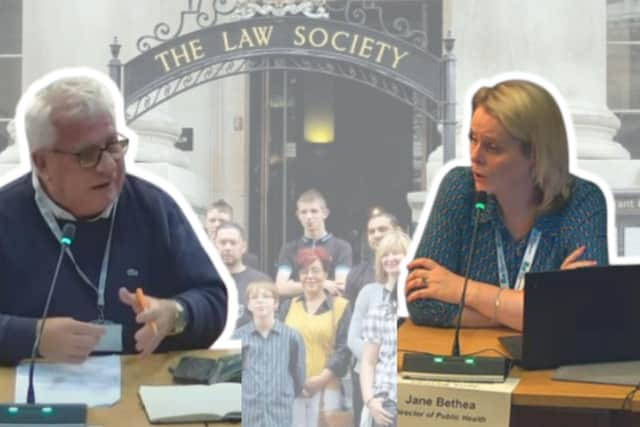

Councillor Mark Pengelly (Lab, Lloyds) was part of the Labour administration that paid out £14m to the litigants in 2010, although he was not part of the council during the clean-up itself.
Now he is the sole remaining Corby Borough Councillor who sits on North Northamptonshire Council – and he is the only member in the chamber so far to have publicly raised the issue for the local families who are demanding answers over where the extent of the spread of the toxic waste, and its effect on the health of their children.
Earlier this month he called for openness and transparency over the issue at a meeting of the full council, and at last night’s Corby Cube Health Scrutiny Committee meeting he again raised the issue directly with Director of Public Health Jane Bethea, who revealed that her department was now conducting an examination of childhood cancer data.
Cllr Pengelly said: “There’s a massive concern in Corby about children’s cancer in the town, and I don’t know if that level is higher than the national average or lower than the national average but there’s a lot of worry and concern out there.
"I know it’s a difficult question for us, but how to we tackle it?
"My case book, and Facebook, is full of people saying that land where the soil was dumped in all different parts of Corby, and certain housing estates, is poisonous.
"If you’re living on a new estate where you've bought a house, you’d be terrified. You’ve spent £300,000 on a new house and you’ve been told there’s poison coming up through it.
"How can we help dispel this or say look, there is an issue here?
"For everybody in this room, you haven’t made this happen, this is something that’s happened in the past and this is something we have to tackle and work with.
"I remember 20-odd years ago being told there’s people going around saying ‘there’s going to be a big birth defect thing in Corby, don’t worry it’s going nowhere’ and we ended up paying millions of pounds.
"I think we have got to look. People are worried. There are mums that are worried. How do we stop that worry and how to we support the people who we all represent?”
Since the five councils merged in 2021 it has become increasingly tricky for officials – and for our reporters – to get town-level data on a range of issues. Most data is broken down by local authority, which does not always take into account the huge discrepancies between life for residents in Corby, and life for residents in other more affluent areas of the county.
Ms Bethea, the Director of Public health, acknowledged that it wasn’t always easy to find reliable data, but said that her team was already compiling it after being approached by a group of concerned parents.
She said: “We are doing analysis of the data at the moment. We need to objectively look at that data.. We don’t hold some of this data but it doesn’t mean we can’t find it.
"Some of the data won’t go back far enough but we can look back through a number of years and the best way of doing that it saying, let’s look at the data we have got for cases of childhood cancer, all childhood cancers, and then we map that.
“And we say what is the rate of that across the whole of North Northamptonshire and what does it look like in different areas, and that’s under way at the moment.
“We do that completely objectively.”
She said the data would then be reviewed by an independent statistician and that the process would be transparent.
"We want to be confident about that. It’s not our data. My job as a Director of Public health is to advocate for the population and if we have the ability to support the population with answering that question, absolutely we’ll do it and we are doing it.”
She said timescales will depend on data verification.
"It’s got to be right, we are doing it at the moment and then we will share that,” she said.
She added that she hadn’t seen the figures yet herself.
"I’m a parent, lots of us are, and we’d all want somebody to take that up and to respond to that question, so we are responding to that question.”
Back in the 1999 when local Northamptonshire Health Authority was first asked to examine whether of birth defects in Corby, it concluded that there was no evidence of a cluster in the town. But it later emerged their research was badly flawed and came under heavy fire from Judge Akenhead in his Corby Group Litigation judgement.