
Camino Inglés pilgrimage route revival takes step forward with waymarkers in North Northamptonshire
The Camino Project aims to rediscover and promote historic walking routes once travelled by pilgrims centuries ago
The revival of a historic pilgrimage route, the Camino Inglés, through North Northamptonshire has taken an important step forward.
‘Greenway Champions’ met at the Rushden Lakes’ Discover Northamptonshire Tourism Hub ahead of work to install way markers to help identify the Camino trail for a new generation of walkers.
Signs will now be installed across the county to mark the route of the Camino Inglés - a historic pilgrimage trail connecting England with the world-famous Camino de Santiago in northern Spain.
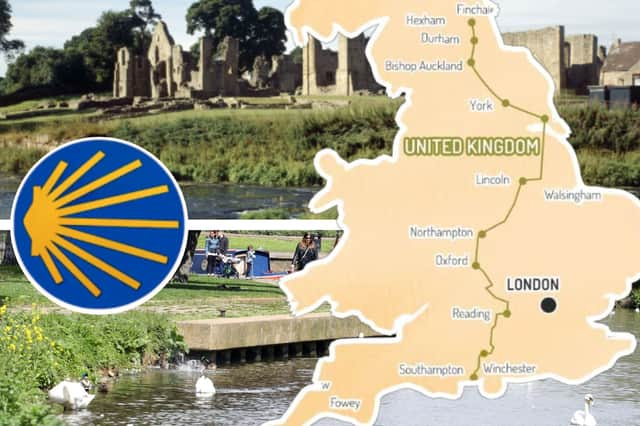

The work marks an important milestone in the development of the Camino Project, which aims to rediscover and promote historic walking routes through the county, allowing people to explore the very landscapes and communities once travelled by pilgrims centuries ago.
The Camino Inglés forms part of a much longer route stretching from Durham to Southampton, linking with the wider network of pilgrimage trails leading towards Santiago de Compostela in Spain. Its journey through North Northamptonshire connects historic places of worship, beautiful countryside and heritage locations, while also drawing on the history of the Queen Eleanor Crosses Way.
Now, thanks to the efforts of volunteers putting up the distinctive route signage, these historic connections are becoming increasingly visible on the ground.
What was once a journey undertaken by pilgrims travelling on foot across the country can be rediscovered by today’s walkers - whether they are looking for a new countryside adventure, a longer walking challenge, a connection with local history or simply an opportunity to explore somewhere new and enjoy the great outdoors.

This unique heritage project is being delivered in collaboration with North Northamptonshire Council’s Greenway Project - a long-term vision to create a network of safer, traffic-free routes on accessible surfaces to connect towns, villages, green spaces and visitor destinations across the area.
Alongside the installation of the route signage, local businesses will be encouraged to get involved and become part of the growing Camino Trail experience.
Cafés, pubs, restaurants, farm shops, accommodation providers and other visitor attractions could all play a part in welcoming walkers, providing places to stop, refresh and recharge along their journey.
The next step of this project will be the introduction of Camino passport stamps at participating businesses and locations. Inspired by the traditional pilgrim passports used on Camino routes across Europe, walkers will be able to visit participating businesses, collect their individual stamps and build a record of their journey as they explore the route.
Pilgrimage has been part of Britain’s history since ancient times. Pagan paths became religious journeys with Christianity and the discovery of the tomb of St James the Apostle made of Santiago a most desirable destination for the intrepid medieval pilgrims.
The tradition was brought to a drastic end in the 16th century when Henry VIII banned pilgrimage.
Camino Inglés starts at Finchale Priory in County Durham, the site of the hermitage of St Godric, the first known English pilgrim to Santiago. The path ends in Southampton.