
Northampton General Hospital rated ‘requires improvement’ and warning notice issued after regulation breaches found by watchdog

Northampton General Hospital (NGH) has been rated ‘requires improvement’ by the care watchdog, after regulation breaches were found.
Medical care and urgent and emergency care at the town’s hospital were inspected by the Care Quality Commission (CQC) in February this year.
In a report published on Wednesday August 13, the CQC confirmed that medical care has been rated ‘requires improvement’ again as three breaches of regulation were found. Urgent and emergency care has dropped its rating from ‘good’ to ‘requires improvement’. How safe the service is has been rated ‘inadequate’ and inspectors found three more breaches of regulation in the emergency care service.
The new ratings for these services has led to an overall rating at NGH of ‘requires improvement’, although the hospital as a whole in the caring and responsive categories has been rated ‘good’.
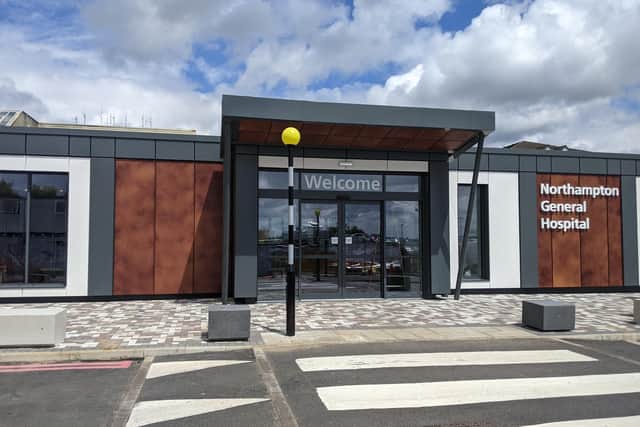

Hospital bosses have apologised for not providing the level of care communities “need and deserve” and have said they have already undertaken “significant work” to address the concerns.
The three breaches of regulation in medical care related to safe care and treatment, staffing, and management of the service and the breaches in urgent and emergency care related to safe care and treatment, safe staffing and management of the service.
CQC has told the trust to submit an action plan showing what action it is taking in response to these concerns.
The watchdog also issued a warning notice following the inspection to highlight the urgent improvements needed to the flow of people through both services, and to make sure people avoided harm in urgent and emergency care.
What issues were identified in medical care, according to inspectors
- Staff did not ensure people had privacy when discussing personal information with them, and the trust had placed additional beds in ward bays.
- Staff did not consistently keep people’s records updated, and in some instances did not accurately record when they gave people medication. This left people at risk of missing or receiving too much medication, compromising their safety.
- Leaders did not make sure that the environments were suitable for staff to provide care.
- Leaders did not always work with staff when incidents happened to identify what went wrong and make change to prevent them from happening again.
- The service and healthcare partners did not work together closely enough to help get people out of hospital safely or in a timely manner.
Inspectors did, however, say staff understood their responsibilities for safeguarding and protecting people from harm and leaders supported staff to develop in their roles.
What issues were identified in urgent and emergency care, according to inspectors
- Leaders and staff did not identify the risks that people using the service faced, which put them at risk of harm. Inspectors were particularly concerned about the risk people faced from the deterioration of their condition and developing pressure ulcers.
- People waited a long time in the department due to the lack of flow through the hospital and demand on services.
- Leaders did not manage the service effectively. They did not review incidents in a timely way, which meant they could not identify learning opportunities to improve the service.
- Staff did not manage medicines in line with guidance.
However, inspectors did say leaders and staff worked closely together to deliver care. The department also worked closely and collaboratively with other services so that people experienced consistent care and leaders ensured there were enough staff to deliver safe care. Inspectors also said staff felt comfortable raising concerns.
What the CQC has said
Craig Howarth, CQC deputy director of operations in the midlands, said: “Since our previous inspection at NGH, we found improvements were still needed in medical care, and the safety and quality of care in urgent and emergency care had declined.
“This is consistent with our findings around the quality of leadership in both services which we found required improvement. Without this strong leadership, staff struggled to always have the direction needed to provide good care.
“People and their families told us they had positive experiences when they received care in medical care. Staff treated them with kindness and respect. However, staff didn’t always clearly communicate with people about their treatment or discharge plans, and they didn’t involve people in discussions about their immediate needs.
“We had several concerns about how people flowed through medical care services. At the time of the inspection, leaders hadn’t fully embedded effective processes to help get people home from hospital when they were ready to leave. This in turn affected capacity across the hospital, leaving other departments unable to admit people due to a lack of available beds.
“People had mixed experiences when they used urgent and emergency care services. Staff delivered inconsistent care meaning some people waited a long time to access care and treatment, and receive information, medication or pain relief.
“We had specific concerns around how staff in this service administered medication and completed necessary training, and how leaders responded to incidents and complaints. These are areas where the trust needs to make urgent improvements.
We told the trust where it needed to make rapid improvements and will continue to monitor the service closely to ensure people stay safe while this happens.”
What the hospital has said
The University Hospitals of Northamptonshire’s Medical Director, Hemant Nemade, said: “We are truly sorry that we have not provided the level of care that our communities need and deserve.
“We are committed to learning and improving to ensure every patient receives safe, high-quality care.
“Since the inspection was carried out in February 2025, we have undertaken significant work to address the CQC’s concerns.
“Many new processes are now in place to improve and monitor safety and care, enhance privacy and dignity and improve how we support patients throughout their emergency care journey.
“We remain committed to delivering safe, high-quality care and we will continue to listen to and work with our patients, staff, and system partners to offer the best care possible.”
The full report will be released on the CQC website in the coming days.