
Meet your local real life 'death cleaners'
Channel 4 recently released a brand-new series called Crime Scene Cleaners, which gives a shocking insight into the messy, previously unseen world of dead bodies, blood and biohazards.
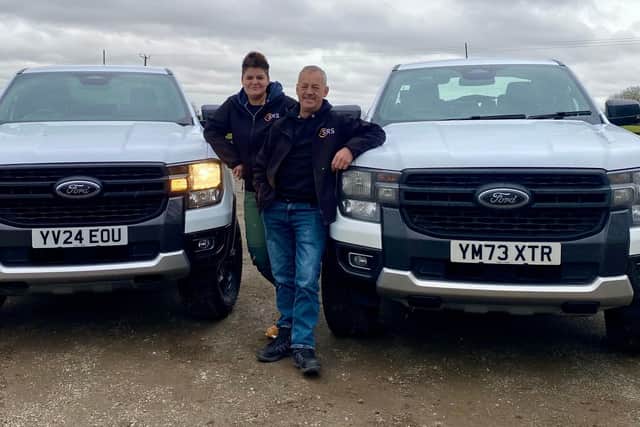
But it’s an everyday occurrence for Northamptonshire death scene cleaners, Specialist Remediation Solutions (SRS), who are regularly drafted into crime scenes for the extensive clean-up operation to remove all traces of human remains.
Experts in their field, this talented team, based in Desborough, spend their days restoring order and cleanliness after bodily fluids have contaminated an area.
It’s not a job for the faint hearted. A partially decomposed corpse is not only visually distressing, but the smell of a dead body permeates all fabrics in a property, including carpets and furniture.


SRS operations director, Elena Paunete, said: “You have to completely switch off. You've got a job to do. But the smell of a dead body never goes away, and sometimes when we finish a job we travel back in silence because we're both thinking about what we've just done, and you think about that person and their life.”
Work from SRS usually comes from the families or friends of the deceased, however sometimes calls come in from police stations, care homes or an authority such as a housing association or the Highways Agency. The award-winning company has also recently secured a contract with a railway company to help with clean ups when a train hits a person or an animal.
The length of each job depends on the level of decontamination, the size of the corpse and how long it is left for. In a recent case in Northamptonshire, a man had died in a flat and his body was only discovered because the neighbour in the flat below noticed an unpleasant smell and his own flat attracting flies.
The body had already begun to decompose, and all the bodily fluids of the deceased had seeped into the concrete below. The SRS clean up team were forced to grind the concrete and then encapsulate the area to make it safe. They also fogged both apartments to remove any lingering odours.
Elena said: “When you’re doing a clean-up in a house and the bodily fluids go through the carpet into the underlay and the floorboards, you can cut that to remove any contaminated material, but when it goes into concrete it is a different level.
“The length of a job really depends on how long the person has been there and the bigger the person, the larger the contaminated area will be, as there is so much more body fat and fluids when they decompose. Sometimes it takes just a few hours but occasionally it might be a few days.”
The team has all the relevant kit, including a wet vacuum cleaner, dry vacuum cleaner, HEPA filter, hazmat suits, masks, boot covers and specialist cleaning solutions for decontamination to kill any pathogens on site and avoid disease.
All the team wear hazmat suits and masks and add an additional level of protection with the Hepatitis B vaccine to prevent infection.
When the team visit a site, they firstly assess what's involved before any hazards are removed and the trauma scene is decontaminated. They will also discuss with any friends or family if they want any additional services such as house contents removal as the smell of a dead body penetrates all fibres.
Compassion is also a key attribute of a death cleaner, as whatever the situation, the deceased is somebody’s loved one.
Elena said: “One of the things with trauma is being there for people that really don’t want to deal with this sort of situation because they have an emotional attachment. We try to go above and beyond to make it easier.
“While we have to take the emotion out of it, when you’re speaking to a family member, you have to be very aware of their feelings. There are very sensitive questions we need to ask and I know I wouldn’t want someone asking me all these questions while I am going through this level of trauma.
“The ideal scenario with this would be to actually receive a phone call from somebody who is not directly involved, but knows what's happened.”
Previous jobs, where the deceased has been a drug user, has seen the SRS team come across used needles hidden in unexpected places such as light switches or in furniture.
For road traffic collisions it is very important to identify any body parts still left on scene, potentially missed. Anything bigger than a partial finger will need to be notified to the police to determine if it’s required for any investigation or it can be removed as clinical waste.
Unexplained deaths may also involve calls with the coroner assigned to the case.
But the clean ups are not always deaths. Sometimes jobs include properties where someone has been alone and unwell, and SRS are enlisted for the biohazard clean-up of blood, excrement or urine.
“It may be a trauma but not a death,” said Elena. “The other week we had a lady call and her father had been ill but was too embarrassed to tell anyone. After a while, she realised something wasn’t right, went to check on him and he ended up in hospital.
“But there were lots of bodily fluids around the house and it was our job to make it safe for his return home from hospital. It was a difficult job because once you've got blood on a carpet that has been there for a few weeks, it is a real struggle to get it out, if at all possible.
“We always start from the first area of contamination you see and work inward so you don't get to the end of the room and get yourself contaminated, and then come out.”
All contaminated waste, including the team hazmat suits, will go in specific yellow bags and disposed of accordingly. Masks are washed and reused, but each job still leaves a lasting impact.
“We’ll always sanitise and decontaminate to the best of our abilities,” said Elena. “But talking from my own personal experience, that smell of a dead body does stay with you. It’s a very particular smell, I could never describe it.
“You do have to try compartmentalise it though. It is obviously sad but it's a part of life, unfortunately, and we're doing a job not too many other people want to do.”